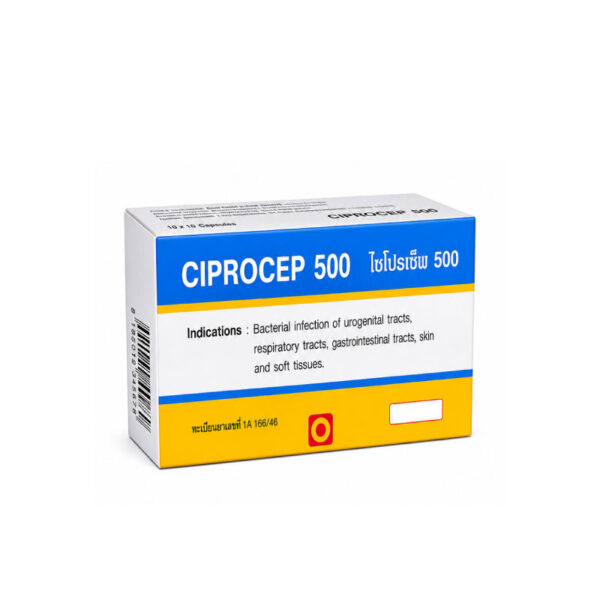
TO CIPROCEP (Ciprofloxacin) 500 mg 10×10 Tablets
Ciprofloxacin 500 mg เป็นยาปฏิชีวนะกลุ่ม fluoroquinolone ออกฤทธิ์ฆ่าเชื้อแบคทีเรียโดยยับยั้ง DNA gyrase และ topoisomerase IV ใช้รักษาการติดเชื้อแบคทีเรียที่ไวต่อยา เช่น การติดเชื้อทางเดินปัสสาวะ การติดเชื้อทางเดินหายใจบางชนิด กระดูกและข้อ ผิวหนัง และการติดเชื้อบางประเภท โดยต้องพิจารณาความไวของเชื้อและความเหมาะสมของ fluoroquinolone ก่อนใช้ ฐานข้อมูล อย. ไทยระบุ CIPROCEP 500 เป็น film-coated tablet ที่มี ciprofloxacin hydrochloride เทียบเท่า Ciprofloxacin 500 mg และมี บริษัท ที.โอ.ฟาร์ม่า จำกัด เป็นผู้รับอนุญาต. (ข้อมูลยาแห่งชาติ)
การออกฤทธิ์
Ciprofloxacin เป็นยาปฏิชีวนะชนิด bactericidal ในกลุ่ม fluoroquinolone ออกฤทธิ์ยับยั้งเอนไซม์ bacterial DNA gyrase (topoisomerase II) และ topoisomerase IV ซึ่งมีบทบาทสำคัญต่อการจำลอง DNA การถอดรหัส การซ่อมแซม DNA และการแบ่งโครโมโซมของแบคทีเรีย
การยับยั้งเอนไซม์เหล่านี้ทำให้กระบวนการเพิ่มจำนวนของเชื้อหยุดลงและนำไปสู่การตายของเซลล์แบคทีเรีย. (DailyMed)
ขอบเขตการทำลายเชื้อ
Ciprofloxacin มีฤทธิ์เด่นต่อแบคทีเรีย Gram-negative หลายชนิด และมีฤทธิ์ต่อ Gram-positive บางชนิด
เชื้อที่อาจไวต่อ Ciprofloxacin ได้แก่ Escherichia coli, Klebsiella spp., Enterobacter spp., Proteus spp., Citrobacter spp., Serratia spp., Pseudomonas aeruginosa, Haemophilus influenzae, Moraxella catarrhalis, Salmonella spp. และ Shigella spp. รวมถึงเชื้ออื่นบางชนิดขึ้นกับ susceptibility ของแต่ละพื้นที่
สำหรับ Gram-positive มีฤทธิ์ต่อเชื้อบางชนิด เช่น Staphylococcus aureus ที่ไวต่อ methicillin แต่ไม่ควรถือว่า Ciprofloxacin มีประสิทธิภาพสม่ำเสมอต่อเชื้อ Gram-positive ทุกชนิด โดยเฉพาะ Streptococcus pneumoniae ซึ่งมักมีทางเลือกที่เหมาะสมกว่า
การเลือกใช้ควรยึด culture/susceptibility, local resistance pattern และ antimicrobial stewardship โดยเฉพาะโรคติดเชื้อที่มีทางเลือกยาปฏิชีวนะอื่นที่เหมาะสมกว่า. (DailyMed)
เภสัชจลนศาสตร์
Ciprofloxacin ถูกดูดซึมได้รวดเร็วหลังรับประทาน โดย oral bioavailability อยู่ประมาณ 70% และระดับยาในเลือดเพิ่มขึ้นตามขนาดยา
หลังรับประทาน Ciprofloxacin 500 mg ระดับยาในพลาสมาสูงสุดมักเกิดภายในประมาณ 1–2 ชั่วโมง
ยาจับกับ plasma protein ค่อนข้างต่ำประมาณ 20–40% และกระจายเข้าสู่เนื้อเยื่อและของเหลวในร่างกายได้ดี
Ciprofloxacin ถูก metabolized บางส่วนที่ตับ แต่การกำจัดส่วนสำคัญเกิดทางไต ทั้งในรูป unchanged drug และ metabolites
Plasma elimination half-life โดยทั่วไปประมาณ 4 ชั่วโมง ในผู้ที่มี renal function ปกติ และอาจยาวนานขึ้นเมื่อไตทำงานลดลง จึงต้องพิจารณาปรับขนาดหรือช่วงห่างของยาใน renal impairment. (DailyMed)
ข้อห้ามใช้
ห้ามใช้ในผู้ที่แพ้ Ciprofloxacin, quinolones หรือส่วนประกอบของยา
ห้ามใช้ Ciprofloxacin ร่วมกับ tizanidine เนื่องจาก Ciprofloxacin ยับยั้ง CYP1A2 อย่างมาก ทำให้ระดับ tizanidine เพิ่มสูงขึ้นและอาจเกิด hypotension หรือ excessive sedation อย่างรุนแรง. (DailyMed)
ควรหลีกเลี่ยงในผู้ที่เคยเกิด serious adverse reaction จาก fluoroquinolone เช่น tendon rupture, severe neuropathy หรือ serious CNS adverse effects เว้นแต่ไม่มีทางเลือกที่เหมาะสมกว่าและแพทย์ประเมิน benefit-risk แล้ว
ข้อความระวัง
Fluoroquinolones รวมถึง Ciprofloxacin มีคำเตือนสำคัญเกี่ยวกับ tendinitis, tendon rupture, peripheral neuropathy และ serious central nervous system effects ซึ่งบางกรณีอาจรุนแรง ทำให้พิการ หรือไม่กลับคืนเป็นปกติ ควรหยุดยาและรับการประเมินหากมีอาการเหล่านี้. (DailyMed)
Tendinitis และ tendon rupture อาจเกิดขึ้นได้ โดยเฉพาะ Achilles tendon ความเสี่ยงสูงขึ้นในผู้สูงอายุ ผู้ใช้ corticosteroids ผู้มี renal impairment และผู้ปลูกถ่ายอวัยวะ
Peripheral neuropathy อาจแสดงด้วยอาการชา เสียวซ่า ปวดแสบปวดร้อน หรือกล้ามเนื้ออ่อนแรง และอาจเกิดขึ้นอย่างรวดเร็วหลังเริ่มยา
Ciprofloxacin อาจก่อ CNS effects เช่น เวียนศีรษะ กระสับกระส่าย สับสน hallucinations, depression หรือ seizures
ควรหลีกเลี่ยง Ciprofloxacin ในผู้ที่มี myasthenia gravis เพราะอาจทำให้ muscle weakness รุนแรงขึ้น. (DailyMed)
อาจเกิด QT prolongation จึงควรระวังในผู้ที่มี congenital long QT, hypokalaemia, bradycardia หรือใช้ยาที่ prolong QT
มีรายงาน hepatotoxicity และ severe hypersensitivity reactions รวมถึง anaphylaxis
อาจเกิด Clostridioides difficile-associated diarrhoea ระหว่างหรือหลังการใช้ยาปฏิชีวนะ
Ciprofloxacin อาจทำให้ระดับน้ำตาลผิดปกติ ทั้ง hypoglycaemia และ hyperglycaemia โดยเฉพาะผู้ป่วยเบาหวานที่ใช้ insulin หรือยาลดน้ำตาล. (DailyMed)
การใช้ยาในระยะตั้งครรภ์และให้นมบุตร
การตั้งครรภ์: ข้อมูลในมนุษย์ยังไม่แสดงหลักฐานชัดเจนว่าทำให้เกิด major congenital malformations แต่โดยทั่วไปการเลือกใช้ Ciprofloxacin ระหว่างตั้งครรภ์ควรประเมิน benefit-risk และพิจารณายาปฏิชีวนะทางเลือกที่มีข้อมูลด้านความปลอดภัยมากกว่าเมื่อเหมาะสม
การให้นมบุตร: Ciprofloxacin สามารถผ่านเข้าสู่น้ำนมได้ Current U.S. prescribing information ไม่แนะนำ breastfeeding ระหว่างรักษา และระบุว่าสามารถพิจารณาปั๊มและทิ้งน้ำนมระหว่างใช้ยาและต่ออีก 2 วันหลัง dose สุดท้าย ในข้อบ่งใช้ทั่วไป ทั้งนี้ควรประเมินร่วมกับแพทย์เป็นรายกรณี. (DailyMed)
อาการข้างเคียง
อาการไม่พึงประสงค์ที่พบได้ ได้แก่ คลื่นไส้ ท้องเสีย อาเจียน ผื่น และค่าการทำงานของตับผิดปกติ. (DailyMed)
อาการสำคัญที่ต้องระวัง ได้แก่ tendinitis/tendon rupture, peripheral neuropathy, seizures, severe psychiatric/CNS reactions, QT prolongation, severe dysglycaemia, hepatotoxicity, anaphylaxis, severe skin reactions และ C. difficile-associated diarrhoea
หากมีท้องเสียรุนแรงหรือถ่ายเป็นเลือดระหว่างหรือหลังใช้ยา ควรได้รับการประเมิน ไม่ควรซื้อยาหยุดถ่ายใช้เองโดยไม่ทราบสาเหตุ
การได้รับยาเกินขนาด
ไม่มี specific antidote สำหรับ Ciprofloxacin overdose
การรักษาเป็นแบบ supportive และ symptomatic ควรติดตาม renal function, hydration, ECG และอาการทางระบบประสาทตามความเหมาะสม
Ciprofloxacin ถูกกำจัดออกด้วย haemodialysis หรือ peritoneal dialysis ได้เพียงเล็กน้อย จึงไม่ใช่วิธีหลักในการรักษา overdose
ปฏิกิริยาระหว่างยา
Tizanidine: ห้ามใช้ร่วมกัน เนื่องจากระดับ tizanidine เพิ่มขึ้นอย่างมากและอาจทำให้ hypotension และ sedation รุนแรง. (DailyMed)
Antacids และผลิตภัณฑ์ที่มี calcium, magnesium, aluminium, iron หรือ zinc รวมถึง sucralfate: ลดการดูดซึม Ciprofloxacin ควรรับประทาน Ciprofloxacin อย่างน้อย 2 ชั่วโมงก่อน หรือ 6 ชั่วโมงหลัง ผลิตภัณฑ์เหล่านี้. (DailyMed)
Theophylline: Ciprofloxacin สามารถเพิ่มระดับ theophylline และมีรายงาน adverse reactions รุนแรง ควรหลีกเลี่ยงหรือ monitor อย่างใกล้ชิด. (DailyMed)
Warfarin: อาจเพิ่ม anticoagulant effect จึงควรติดตาม PT/INR และอาการเลือดออก
Insulin หรือยาลดน้ำตาล: อาจเพิ่มความเสี่ยง hypoglycaemia จึงควรติดตาม blood glucose
Phenytoin: ระดับ phenytoin อาจเปลี่ยนแปลง ควร monitor ตามความเหมาะสม
Methotrexate: อาจเพิ่ม methotrexate exposure และ toxicity
Cyclosporine: อาจทำให้ serum creatinine เพิ่มขึ้น
ยาที่ทำให้ QT prolongation อาจเพิ่มความเสี่ยง arrhythmia เมื่อใช้ร่วมกัน. (DailyMed)
ชื่อและความแรงของยา (Drug Name and Strength)
Ciprofloxacin 500 mg per film-coated tablet
สำนักงานคณะกรรมการอาหารและยาไทยระบุ CIPROCEP 500 เป็น film-coated tablet ความแรง 500 mg โดยสารสำคัญคือ ciprofloxacin hydrochloride และผู้รับอนุญาตคือ บริษัท ที.โอ.ฟาร์ม่า จำกัด. (ข้อมูลยาแห่งชาติ)
ขนาดบรรจุตามสินค้าที่ผู้ใช้ระบุ:
10 แผง × 10 เม็ด รวม 100 เม็ด / กล่อง
ข้อบ่งใช้ (Indications)
Ciprofloxacin ใช้สำหรับการติดเชื้อจากแบคทีเรียที่ไวต่อยา เช่น urinary tract infections, chronic bacterial prostatitis, selected lower respiratory tract infections, skin and skin-structure infections, bone and joint infections, complicated intra-abdominal infections, infectious diarrhoea และ typhoid fever ตามข้อบ่งใช้และความไวของเชื้อ. (DailyMed)
Current U.S. labeling ยังมีข้อบ่งใช้เฉพาะ เช่น inhalational anthrax post-exposure และ plague ภายใต้สถานการณ์ที่เหมาะสม. (DailyMed)
สำหรับ acute uncomplicated cystitis, acute exacerbation of chronic bronchitis และ acute sinusitis Current U.S. prescribing information แนะนำให้สงวน Ciprofloxacin ไว้สำหรับผู้ป่วยที่ ไม่มีทางเลือกการรักษาอื่นที่เหมาะสม เนื่องจากความเสี่ยงของ serious fluoroquinolone adverse reactions. (DailyMed)
การใช้จริงในประเทศไทยควรพิจารณา local antimicrobial guidelines และ resistance pattern ร่วมด้วย
ขนาดยาแนะนำ (Recommended Dosage)
ขนาดยา Ciprofloxacin ขึ้นกับ ชนิดของการติดเชื้อ ความรุนแรง เชื้อที่สงสัย/ตรวจพบ และ renal function ไม่ควรใช้ regimen เดียวกับทุกโรค
ตัวอย่างขนาดในผู้ใหญ่จาก current prescribing information ได้แก่:
Urinary tract infection: 250–500 mg ทุก 12 ชั่วโมง โดยระยะเวลาขึ้นกับชนิดและความรุนแรงของการติดเชื้อ
Chronic bacterial prostatitis: 500 mg ทุก 12 ชั่วโมง
Skin and skin-structure infection: 500–750 mg ทุก 12 ชั่วโมง
Bone and joint infection: 500–750 mg ทุก 12 ชั่วโมง
Complicated intra-abdominal infection: 500 mg ทุก 12 ชั่วโมง โดยใช้ร่วมกับยาที่ครอบคลุม anaerobic organisms ตามความเหมาะสม
Infectious diarrhoea: 500 mg ทุก 12 ชั่วโมง
Typhoid fever: 500 mg ทุก 12 ชั่วโมง. (DailyMed)
ดังนั้น CIPROCEP 500 mg ไม่ควรถูกตีความว่า “ครั้งละ 1 เม็ด วันละ 2 ครั้ง” สำหรับทุกโรค ขนาดและระยะเวลาต้องสัมพันธ์กับ diagnosis และ antimicrobial guideline
สำหรับ renal impairment Current U.S. label ระบุแนวทางตัวอย่าง เช่น creatinine clearance 30–50 mL/min ใช้ 250–500 mg ทุก 12 ชั่วโมง ส่วน creatinine clearance 5–29 mL/min ใช้ 250–500 mg ทุก 18 ชั่วโมง และผู้ป่วย dialysis ใช้ 250–500 mg ทุก 24 ชั่วโมงหลัง dialysis. (DailyMed)
Ciprofloxacin สามารถรับประทานพร้อมหรือไม่พร้อมอาหารได้ แต่ไม่ควรรับประทานพร้อม นมหรือโยเกิร์ตเพียงอย่างเดียว หรือเครื่องดื่มเสริม calcium เพียงอย่างเดียว เพราะอาจลดการดูดซึม
ควรดื่มน้ำให้เพียงพอระหว่างการรักษา
คำเตือนตามประกาศคำเตือนสาธารณะ (Warnings in Accordance with Public Safety Announcements)
Fluoroquinolones รวมถึง Ciprofloxacin อาจทำให้เกิด serious, disabling และ potentially irreversible adverse reactions โดยเฉพาะ tendinitis/tendon rupture, peripheral neuropathy และ CNS effects. (DailyMed)
หากมี ปวด บวม หรืออักเสบบริเวณเอ็น ควรหยุดยา พักบริเวณดังกล่าว และรับการประเมินทันที
หากมี ชา เสียวซ่า ปวดแสบปวดร้อน หรืออ่อนแรงของแขนขา ควรหยุดยาและรับการประเมิน peripheral neuropathy
ผู้ที่มี myasthenia gravis ควรหลีกเลี่ยง Ciprofloxacin เพราะอาจทำให้ muscle weakness รุนแรงขึ้น. (DailyMed)
หากมีใจสั่น หน้ามืด เป็นลม หรือใช้ยาที่ทำให้ QT prolongation ควรแจ้งแพทย์หรือเภสัชกร
ควรใช้ Ciprofloxacin เฉพาะเมื่อมีการติดเชื้อแบคทีเรียที่ ยืนยันหรือสงสัยอย่างมีเหตุผลว่าไวต่อยา และไม่ควรใช้กับไข้หวัดหรือโรคติดเชื้อไวรัส เพื่อช่วยลด antimicrobial resistance. (DailyMed)
ภาวะการเก็บรักษา (Storage Conditions)
ฐานข้อมูล อย. ไทยที่ตรวจสอบยืนยันชื่อ CIPROCEP 500, ความแรง 500 mg และรูปแบบ film-coated tablet แต่ข้อมูลสาธารณะที่ตรวจสอบไม่ได้แสดง storage condition เฉพาะผลิตภัณฑ์ของ T.O. Pharma อย่างชัดเจน. (ข้อมูลยาแห่งชาติ)
ดังนั้นควรยึด ฉลากและเอกสารกำกับ CIPROCEP 500 ที่มากับผลิตภัณฑ์จริงในประเทศไทยเป็นหลัก
ไม่ควรนำ storage condition ของ Ciprofloxacin ต่างยี่ห้อมาใช้เป็นข้อกำหนดเฉพาะของ CIPROCEP โดยไม่ได้ตรวจสอบฉลากของ T.O. Pharma
แหล่งข้อมูลอ้างอิง
สำนักงานคณะกรรมการอาหารและยา — CIPROCEP 500
DailyMed — Ciprofloxacin Tablets Prescribing Information
emc — Ciprofloxacin hydrochloride products
หมายเหตุสำคัญ: ข้อมูลนี้จัดทำขึ้นเพื่อให้ความรู้เบื้องต้นเกี่ยวกับยาเท่านั้น ไม่สามารถใช้แทนการวินิจฉัย การรักษา หรือคำแนะนำจากบุคลากรทางการแพทย์ได้ การเลือกใช้ยา ขนาดยา และระยะเวลาการรักษาอาจแตกต่างกันในแต่ละบุคคล โปรดปรึกษาแพทย์หรือเภสัชกรก่อนใช้ยาทุกครั้ง และไม่ควรปรับขนาดยา หยุดยา หรือใช้ยาร่วมกับยาอื่นด้วยตนเอง เพื่อความปลอดภัยในการใช้ยา
TO CIPROCEP (Ciprofloxacin) 500 mg 10×10 Tablets
Ciprofloxacin 500 mg is a fluoroquinolone antibacterial agent that kills susceptible bacteria by inhibiting DNA gyrase and topoisomerase IV. It is used for selected susceptible infections, including urinary, respiratory, skin, bone and joint, gastrointestinal, and other bacterial infections, with treatment guided by antimicrobial susceptibility and appropriate stewardship. The Thai FDA identifies CIPROCEP 500 as a 500 mg film-coated tablet containing ciprofloxacin hydrochloride and licensed to T.O. Pharma Co., Ltd. (ข้อมูลยาแห่งชาติ)
Mechanism of Action
Ciprofloxacin is a bactericidal fluoroquinolone.
It inhibits bacterial DNA gyrase (topoisomerase II) and topoisomerase IV, enzymes required for DNA replication, transcription, repair, recombination, and chromosome segregation.
Inhibition of these enzymes disrupts bacterial DNA replication and results in bacterial cell death. (DailyMed)
Antimicrobial Spectrum
Ciprofloxacin has particularly strong activity against many Gram-negative organisms and activity against selected Gram-positive organisms.
Potentially susceptible pathogens include Escherichia coli, Klebsiella spp., Enterobacter spp., Proteus spp., Citrobacter spp., Serratia spp., Pseudomonas aeruginosa, Haemophilus influenzae, Moraxella catarrhalis, Salmonella spp., and Shigella spp.
Activity against Gram-positive organisms is less consistent, and Ciprofloxacin should not automatically be considered appropriate for infections where Streptococcus pneumoniae is the principal suspected pathogen.
Local susceptibility patterns and antimicrobial-resistance data should guide treatment. (DailyMed)
Pharmacokinetics
Ciprofloxacin is rapidly absorbed following oral administration, with an oral bioavailability of approximately 70%.
Peak plasma concentrations are generally reached within about 1–2 hours after administration.
Protein binding is relatively low, approximately 20–40%, and the drug distributes widely into tissues.
Ciprofloxacin undergoes limited hepatic metabolism and is eliminated substantially through the kidneys as unchanged drug and metabolites.
The plasma elimination half-life is approximately 4 hours in patients with normal renal function and becomes prolonged with renal impairment. (DailyMed)
Contraindications
Ciprofloxacin is contraindicated in patients with hypersensitivity to Ciprofloxacin, other quinolones, or formulation excipients.
Concomitant administration with tizanidine is contraindicated because Ciprofloxacin markedly inhibits CYP1A2, substantially increasing tizanidine exposure and the risk of severe hypotension and sedation. (DailyMed)
Patients who have previously experienced serious fluoroquinolone-associated reactions should generally avoid subsequent fluoroquinolone treatment unless no suitable alternative is available and benefit outweighs risk.
Precautions
Fluoroquinolones, including Ciprofloxacin, have been associated with disabling and potentially irreversible serious adverse reactions, including tendinitis/tendon rupture, peripheral neuropathy, and central nervous system effects. (DailyMed)
Tendon injury may occur during treatment or after discontinuation, particularly in older adults, patients with renal impairment, transplant recipients, and those receiving corticosteroids.
Peripheral neuropathy may present with burning pain, tingling, numbness, or weakness and may become persistent.
CNS effects may include dizziness, confusion, agitation, hallucinations, depression, psychotic reactions, and seizures.
Ciprofloxacin may exacerbate muscle weakness in patients with myasthenia gravis and should generally be avoided in these patients. (DailyMed)
Caution is required in patients at risk of QT prolongation, including those with electrolyte abnormalities or concomitant QT-prolonging medicines.
Other important risks include hepatotoxicity, severe hypersensitivity reactions, dysglycaemia, and Clostridioides difficile-associated diarrhoea. (DailyMed)
Use During Pregnancy and Breastfeeding
Pregnancy: Ciprofloxacin should be used during pregnancy only after an individual assessment of expected benefit and potential risk, with alternative antibacterials considered when appropriate.
Breastfeeding: Ciprofloxacin is excreted into human milk. Current U.S. labeling advises against breastfeeding during treatment and permits pumping and discarding milk during therapy and for an additional 2 days after the final dose for most indications. (DailyMed)
Adverse Effects
Commonly reported adverse reactions include nausea, diarrhoea, vomiting, rash, and abnormal liver-function tests. (DailyMed)
Clinically important adverse reactions include tendinitis/tendon rupture, peripheral neuropathy, serious CNS reactions, seizures, QT prolongation, severe dysglycaemia, hepatotoxicity, anaphylaxis, severe cutaneous reactions, and C. difficile-associated diarrhoea.
Overdose
There is no specific antidote for Ciprofloxacin overdose.
Treatment is supportive and symptomatic, with monitoring of renal function, hydration, ECG, and neurological status when clinically appropriate.
Only a limited amount of Ciprofloxacin is removed by haemodialysis or peritoneal dialysis.
Drug Interactions
Tizanidine: Contraindicated because of markedly increased tizanidine exposure and risk of hypotension and excessive sedation. (DailyMed)
Multivalent cations, antacids, iron, zinc, calcium, magnesium, aluminium, and sucralfate: These products reduce Ciprofloxacin absorption. Ciprofloxacin should generally be taken at least 2 hours before or 6 hours after them. (DailyMed)
Theophylline: Serious and occasionally fatal reactions have been reported with concomitant treatment; avoidance or close serum-level monitoring is appropriate.
Warfarin: Anticoagulant effects may be enhanced; monitor PT/INR and bleeding.
Antidiabetic medicines: Severe hypoglycaemia has been reported; monitor blood glucose.
Phenytoin: Serum concentrations may increase or decrease and should be monitored where appropriate.
Methotrexate: Ciprofloxacin may increase methotrexate exposure and toxicity.
Cyclosporine: Serum creatinine may increase.
Concomitant QT-prolonging medicines may further increase arrhythmia risk. (DailyMed)
Drug Name and Strength
Ciprofloxacin 500 mg per film-coated tablet
The Thai FDA identifies CIPROCEP 500 as a 500 mg film-coated tablet containing ciprofloxacin hydrochloride, licensed to T.O. Pharma Co., Ltd. (ข้อมูลยาแห่งชาติ)
Specified pack size:
10 blisters × 10 tablets = 100 tablets / box
Indications
Ciprofloxacin is used for susceptible bacterial infections including selected urinary tract infections, chronic bacterial prostatitis, lower respiratory tract infections, skin and skin-structure infections, bone and joint infections, complicated intra-abdominal infections, infectious diarrhoea, and typhoid fever. (DailyMed)
Current U.S. labeling also includes specialized indications such as post-exposure inhalational anthrax and plague. (DailyMed)
For acute uncomplicated cystitis, acute exacerbation of chronic bronchitis, and acute sinusitis, current U.S. labeling reserves Ciprofloxacin for patients with no suitable alternative treatment options because of the risk of serious fluoroquinolone adverse reactions. (DailyMed)
Recommended Dosage
Dosage depends on the infection, severity, organism susceptibility, and renal function.
Examples from current prescribing information include:
Urinary tract infection: 250–500 mg every 12 hours.
Chronic bacterial prostatitis: 500 mg every 12 hours.
Skin and skin-structure infection: 500–750 mg every 12 hours.
Bone and joint infection: 500–750 mg every 12 hours.
Complicated intra-abdominal infection: 500 mg every 12 hours, together with appropriate anaerobic coverage.
Infectious diarrhoea: 500 mg every 12 hours.
Typhoid fever: 500 mg every 12 hours. (DailyMed)
Therefore, CIPROCEP 500 mg should not automatically be interpreted as “one tablet twice daily” for every infection. Dose and duration must correspond to the specific diagnosis.
Renal dose adjustment may be required. Current U.S. labeling gives examples of 250–500 mg every 12 hours for creatinine clearance 30–50 mL/min, 250–500 mg every 18 hours for CrCl 5–29 mL/min, and 250–500 mg every 24 hours after dialysis in haemodialysis or peritoneal dialysis patients. (DailyMed)
Ciprofloxacin may be taken with or without food. It should not be taken with dairy products or calcium-fortified beverages alone, although these may be consumed as part of a regular meal.
Adequate hydration should be maintained during treatment.
Warnings in Accordance with Public Safety Announcements
Fluoroquinolones, including Ciprofloxacin, can cause serious, disabling, and potentially irreversible adverse reactions, particularly tendon injury, peripheral neuropathy, and CNS effects. (DailyMed)
Stop treatment and obtain medical advice for tendon pain or swelling.
Stop treatment and seek assessment for numbness, tingling, burning pain, or weakness suggesting peripheral neuropathy.
Ciprofloxacin should generally be avoided in patients with myasthenia gravis because it may exacerbate muscle weakness. (DailyMed)
Patients with palpitations, syncope, significant cardiac disease, or concomitant QT-prolonging medicines require appropriate assessment.
Ciprofloxacin should be used only for infections proven or strongly suspected to be caused by susceptible bacteria in order to reduce the development of antimicrobial resistance. (DailyMed)
Storage Conditions
The Thai FDA confirms the identity, strength, and dosage form of CIPROCEP 500, but the retrieved public Thai record does not clearly state product-specific storage conditions. (ข้อมูลยาแห่งชาติ)
The Thai marketed CIPROCEP 500 package label and T.O. Pharma package insert should therefore take precedence.
Storage instructions from another Ciprofloxacin product should not automatically be treated as CIPROCEP-specific unless confirmed on the Thai product label.
References
Thai FDA — CIPROCEP 500
DailyMed — Ciprofloxacin Tablets Prescribing Information
emc — Ciprofloxacin Hydrochloride Products
Important Notice: This information is provided for general educational purposes only and is not intended to replace professional medical diagnosis, treatment, or advice. The appropriate medicine, dosage, and duration of treatment may vary from person to person. Always consult a doctor or pharmacist before using any medication. Do not change the dose, stop treatment, or combine medicines on your own without professional advice.