Probenecid 500 mg
Probenecid 500 mg เป็นยากลุ่ม uricosuric agent และ renal tubular transport inhibitor ใช้ลดระดับกรดยูริกในเลือดในผู้ป่วยโรคเกาต์ โดยเพิ่มการขับ uric acid ทางไต นอกจากนี้ยังสามารถใช้ร่วมกับ penicillin หรือ β-lactam บางชนิดเพื่อเพิ่มและยืดระดับยาปฏิชีวนะในเลือดได้. (DailyMed)
การออกฤทธิ์
Probenecid ออกฤทธิ์ที่ renal proximal tubule โดย ยับยั้งการดูดกลับ urate ที่ท่อไต ทำให้การขับ uric acid ทางปัสสาวะเพิ่มขึ้นและระดับ serum urate ลดลง จึงใช้เป็น urate-lowering therapy ใน gout. (DailyMed)
นอกจากนี้ Probenecid ยังยับยั้ง tubular secretion ของยาหลายชนิด โดยเฉพาะ penicillin ทำให้ระดับ penicillin ในพลาสมาเพิ่มขึ้นประมาณ 2–4 เท่าในบางสูตร จึงถูกใช้เป็น adjuvant เพื่อเพิ่มและยืดระดับยาบางชนิดในเลือด. (DailyMed)
ขอบเขตการทำลายเชื้อ
ไม่มี
Probenecid ไม่ใช่ยาปฏิชีวนะ และไม่มีฤทธิ์ฆ่าเชื้อโดยตรง แม้สามารถใช้ร่วมกับ penicillin หรือ β-lactam บางชนิดเพื่อเพิ่มระดับยาปฏิชีวนะในเลือดได้. (DailyMed)
เภสัชจลนศาสตร์
Probenecid ถูกดูดซึมหลังรับประทาน จับกับ plasma protein สูง และถูก metabolized บางส่วนก่อนขับออกทางไต
คุณสมบัติทางเภสัชวิทยาที่สำคัญคือการยับยั้ง renal tubular transport ของ urate และสาร/ยาหลายชนิด จึงสามารถเปลี่ยน renal clearance และเพิ่ม plasma concentration ของยาที่ใช้ร่วมกันได้. (DailyMed)
ข้อห้ามใช้
ห้ามใช้ในผู้ที่แพ้ Probenecid
ฉลากสหรัฐฯ ระบุข้อห้ามใน เด็กอายุต่ำกว่า 2 ปี และไม่แนะนำในผู้ที่มี known blood dyscrasias หรือมีประวัติ uric acid kidney stones. (DailyMed)
ไม่ควรเริ่ม Probenecid เพื่อรักษา gout ในช่วงที่กำลังมี acute gout attack ควรรอให้อาการกำเริบเฉียบพลันสงบก่อน. (DailyMed)
ข้อความระวัง
ในช่วงเริ่ม urate-lowering therapy อาจกระตุ้นให้เกิด acute gout flare ได้ หากเกิด gout attack ระหว่างที่ใช้ Probenecid อยู่ สามารถใช้ Probenecid ต่อในขนาดเดิมและรักษา acute attack ด้วย colchicine หรือยาที่เหมาะสมตามการประเมินของแพทย์. (DailyMed)
เนื่องจาก Probenecid เพิ่มการขับ uric acid ทางปัสสาวะ จึงเพิ่มความเสี่ยง uric acid stones, renal colic และ hematuria โดยฉลากแนะนำให้ได้รับน้ำอย่างเพียงพอ และในบางกรณีอาจพิจารณา alkalinization of urine ภายใต้การติดตามทางการแพทย์. (DailyMed)
ควรระวังในผู้ที่มีประวัติ peptic ulcer และในผู้ที่มี renal impairment เพราะประสิทธิภาพของยาอาจลดลง โดยเฉพาะเมื่อ GFR ประมาณ 30 mL/min หรือต่ำกว่า. (DailyMed)
การใช้ยาในระยะตั้งครรภ์และให้นมบุตร
การตั้งครรภ์: Probenecid สามารถผ่าน placenta และตรวจพบใน cord blood ได้ จึงควรใช้เมื่อประโยชน์ที่คาดว่าจะได้รับมากกว่าความเสี่ยงที่อาจเกิดขึ้น. (DailyMed)
การให้นมบุตร: ข้อมูลในฉลากมาตรฐานมีจำกัด จึงควรประเมินความจำเป็นในการรักษา ประโยชน์ของการให้นม และความเสี่ยงต่อทารกเป็นรายบุคคล
อาการข้างเคียง
อาการที่มีรายงาน ได้แก่ ปวดศีรษะ เวียนศีรษะ คลื่นไส้ อาเจียน เบื่ออาหาร และระคายเคืองเหงือก
อาจทำให้เกิด acute gout flare, uric acid stones, hematuria, renal colic และ urinary frequency ได้. (DailyMed)
อาการที่พบได้น้อยแต่สำคัญ ได้แก่ anaphylaxis, fever, urticaria, pruritus, aplastic anemia, leukopenia, hemolytic anemia และ hepatic necrosis. (DailyMed)
การได้รับยาเกินขนาด
อาการทางระบบทางเดินอาหาร เช่น gastric intolerance อาจเป็นสัญญาณของขนาดยาที่มากเกินไป และอาจดีขึ้นเมื่อปรับลดขนาดยา. (DailyMed)
ไม่มี specific antidote การรักษาเป็นแบบ supportive และ symptomatic ตามอาการและภาวะของผู้ป่วย
ปฏิกิริยาระหว่างยา
Probenecid มี drug interactions ที่สำคัญหลายชนิด เพราะยับยั้ง renal tubular secretion
Salicylates เช่น aspirin สามารถต้านฤทธิ์ uricosuric ของ Probenecid และฉลากระบุว่าไม่ควรใช้ร่วมกันเพื่อจุดประสงค์การลดกรดยูริก. (DailyMed)
Methotrexate อาจมีระดับในเลือดเพิ่มขึ้นและเพิ่มความเสี่ยง toxicity จึงอาจต้องลดขนาดและติดตามระดับยาอย่างใกล้ชิด. (DailyMed)
Probenecid อาจเพิ่มระดับหรือยืด half-life ของ penicillins/β-lactams, sulfonamides, sulfonylureas, indomethacin, naproxen, ketoprofen, lorazepam, rifampin และยาบางชนิดอื่น. (DailyMed)
Pyrazinamide สามารถลดฤทธิ์ uricosuric ของ Probenecid ได้. (DailyMed)
ชื่อและความแรงของยา (Drug Name and Strength)
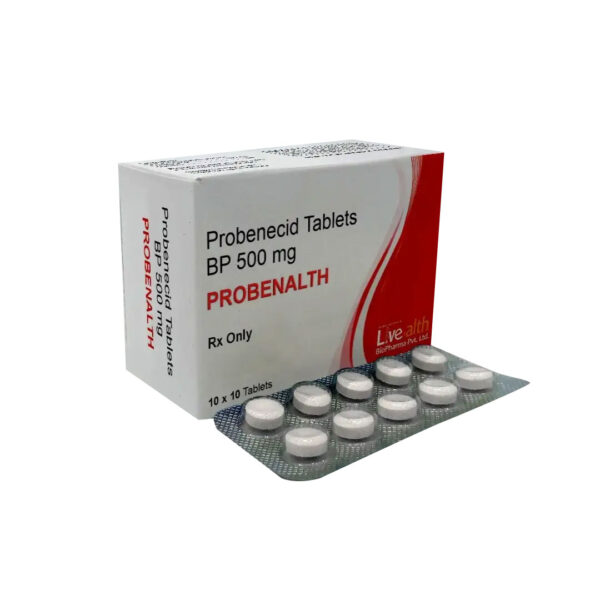
Probenecid 500 mg per tablet
ประเทศไทยมีผลิตภัณฑ์ Probenecid 500 mg ขึ้นทะเบียน โดยฐานข้อมูล อย. ไทยแสดงผลิตภัณฑ์ชนิด tablet ความแรง 500 mg เช่น PROBEN TABLET. (ข้อมูลยาแห่งชาติ)
ข้อบ่งใช้ (Indications)
ใช้รักษา hyperuricemia ที่สัมพันธ์กับ gout และ gouty arthritis. (DailyMed)
นอกจากนี้ยังใช้เป็น adjuvant ร่วมกับ penicillin หรือ β-lactam บางชนิด เช่น ampicillin, methicillin, oxacillin, cloxacillin หรือ nafcillin เพื่อเพิ่มและยืด plasma concentration ของยาปฏิชีวนะ. (DailyMed)
ขนาดยาแนะนำ (Recommended Dosage)
สำหรับ gout ในผู้ใหญ่ ฉลาก DailyMed แนะนำเริ่มที่ 250 mg วันละ 2 ครั้ง เป็นเวลา 1 สัปดาห์ จากนั้นเพิ่มเป็น 500 mg วันละ 2 ครั้ง. (DailyMed)
หากยังควบคุมระดับกรดยูริกหรืออาการไม่ได้ สามารถเพิ่มขนาดทีละ 500 mg/day ทุกประมาณ 4 สัปดาห์ ตามความทนต่อยา โดยทั่วไปไม่ควรเกิน 2,000 mg/day. (DailyMed)
ไม่ควรเริ่มยาในช่วง acute gout attack แต่หากเกิด gout flare หลังเริ่ม Probenecid แล้ว โดยทั่วไปสามารถให้ Probenecid ต่อและรักษา acute attack แยกต่างหาก. (DailyMed)
ควรดื่มน้ำให้เพียงพอเพื่อลดความเสี่ยง uric acid stone และการปรับ urine pH ควรทำตามคำแนะนำของแพทย์. (DailyMed)
สำหรับการใช้ร่วมกับ penicillin ในผู้ใหญ่ ฉลากระบุขนาดรวม 2,000 mg/day แบ่งรับประทานหลายครั้ง โดย regimen จริงขึ้นอยู่กับยาปฏิชีวนะและข้อบ่งใช้. (DailyMed)
คำเตือนตามประกาศคำเตือนสาธารณะ (Warnings in Accordance with Public Safety Announcements)
Probenecid อาจกระตุ้น acute gout attack ในช่วงเริ่มรักษา จึงควรให้คำแนะนำผู้ป่วยเรื่อง gout flare และการรักษาร่วมที่เหมาะสม. (DailyMed)
ควรเฝ้าระวัง uric acid nephrolithiasis, hematuria และ renal colic โดยเฉพาะผู้ที่มีประวัตินิ่วหรือได้รับน้ำไม่เพียงพอ. (DailyMed)
หากเกิด ผื่น ลมพิษ ไข้ บวม หายใจลำบาก หรืออาการแพ้รุนแรง ควรหยุดยาและเข้ารับการประเมินทันที เพราะมีรายงาน anaphylaxis แม้พบไม่บ่อย. (DailyMed)
ต้องตรวจสอบยาที่ใช้ร่วมกันอย่างระมัดระวัง โดยเฉพาะ methotrexate และ salicylates เนื่องจากอาจเกิด interaction ที่มีความสำคัญทางคลินิก. (DailyMed)
ภาวะการเก็บรักษา (Storage Conditions)
เก็บที่อุณหภูมิ 20–25°C โดยช่วงอุณหภูมิชั่วคราวที่ยอมรับได้คือประมาณ 15–30°C
เก็บในภาชนะปิดสนิทและป้องกันแสง. (DailyMed)
แหล่งข้อมูลอ้างอิง
ในประเทศ
สำนักงานคณะกรรมการอาหารและยา (อย.) — Probenecid 500 mg tablets ที่ขึ้นทะเบียนในประเทศไทย
Thai FDA (ข้อมูลยาแห่งชาติ)
ต่างประเทศ
U.S. National Library of Medicine — Probenecid Tablets USP 500 mg, Prescribing Information
DailyMed (DailyMed)
English Version
Probenecid 500 mg
What is Probenecid 500 mg?
Probenecid 500 mg is a uricosuric agent and renal tubular transport inhibitor used to lower serum uric acid in patients with gout. It may also be used as an adjunct to certain penicillins and other β-lactam antibiotics to increase and prolong their plasma concentrations. (DailyMed)
Mechanism of Action
Probenecid inhibits renal tubular reabsorption of urate, thereby increasing urinary uric acid excretion and reducing serum urate concentrations. (DailyMed)
It also inhibits renal tubular secretion of several drugs, particularly penicillins, and may therefore increase and prolong their plasma concentrations. (DailyMed)
Antimicrobial Spectrum
None.
Probenecid has no direct antibacterial, antiviral, or antifungal activity. Its use with antibiotics is pharmacokinetic rather than antimicrobial.
Pharmacokinetics
Probenecid is absorbed following oral administration, is highly protein bound, and is partly metabolised before renal elimination.
Its major clinically relevant pharmacokinetic effect is inhibition of renal tubular transport, which can reduce renal clearance and increase systemic exposure to several concomitant medicines. (DailyMed)
Contraindications
Contraindicated in patients with hypersensitivity to Probenecid and in children younger than 2 years.
It is not recommended in patients with known blood dyscrasias or uric acid renal stones. (DailyMed)
Treatment for gout should not be initiated until an acute gout attack has subsided. (DailyMed)
Precautions
Initiation of therapy may precipitate an acute gout flare.
Because Probenecid increases urinary uric acid excretion, adequate hydration is important to reduce the risk of uric acid nephrolithiasis, renal colic, and haematuria. Urinary alkalinisation may be considered when clinically indicated. (DailyMed)
Use with caution in patients with peptic ulcer disease.
Probenecid may be ineffective in chronic renal insufficiency, particularly when the GFR is approximately 30 mL/min or less. (DailyMed)
Use During Pregnancy and Breastfeeding
Pregnancy: Probenecid crosses the placenta and has been detected in cord blood. Treatment should be used only when the anticipated benefit justifies potential risk. (DailyMed)
Breastfeeding: Available product-label information is limited; use should be individualised according to maternal need and potential infant exposure.
Adverse Effects
Reported adverse effects include headache, dizziness, nausea, vomiting, anorexia, and gingival discomfort.
Probenecid may precipitate acute gout and may cause uric acid stones, haematuria, renal colic, and urinary frequency. (DailyMed)
Rare but serious reactions include anaphylaxis, aplastic anaemia, leukopenia, haemolytic anaemia, nephrotic syndrome, and hepatic necrosis. (DailyMed)
Overdose
Gastrointestinal intolerance may indicate excessive dosing and may improve with dose reduction. (DailyMed)
There is no specific antidote. Management is supportive and symptomatic.
Drug Interactions
Salicylates, including aspirin, antagonise the uricosuric effect of Probenecid. (DailyMed)
Probenecid may substantially increase methotrexate exposure and toxicity risk.
It can also increase or prolong exposure to penicillins and other β-lactams, sulfonamides, sulfonylureas, indomethacin, naproxen, ketoprofen, lorazepam, rifampin, and several other medicines. (DailyMed)
Drug Name and Strength
Probenecid 500 mg per tablet
Probenecid 500 mg tablets are registered in Thailand. (ข้อมูลยาแห่งชาติ)
Indications
Indicated for the treatment of hyperuricaemia associated with gout and gouty arthritis. (DailyMed)
It is also indicated as an adjunct to certain penicillins and related β-lactam antibiotics to increase and prolong antibiotic plasma concentrations. (DailyMed)
Recommended Dosage
For gout in adults, the recommended initial dose is 250 mg twice daily for 1 week, followed by 500 mg twice daily. (DailyMed)
If further urate lowering is required, the total daily dose may be increased by 500 mg increments every 4 weeks, generally not exceeding 2,000 mg/day. (DailyMed)
Adequate fluid intake is recommended to reduce the risk of uric acid stone formation.
For use with penicillin in adults, current U.S. labeling recommends a total Probenecid dose of 2,000 mg/day in divided doses, with the exact regimen depending on the antimicrobial indication. (DailyMed)
Warnings in Accordance with Public Safety Announcements
Treatment may precipitate acute gout, particularly during initiation.
Patients should be monitored for uric acid nephrolithiasis, haematuria, and renal colic. (DailyMed)
Severe hypersensitivity, including anaphylaxis, has been reported. Treatment should be discontinued if a significant hypersensitivity reaction develops. (DailyMed)
Particular attention should be paid to clinically important interactions with methotrexate and salicylates. (DailyMed)
Storage Conditions
Store at 20–25°C, with permitted excursions to 15–30°C.
Keep in a well-closed, light-resistant container. (DailyMed)
References
Thailand
Thai Food and Drug Administration — Probenecid 500 mg tablets
Thai FDA
International
U.S. National Library of Medicine — Probenecid Tablets USP 500 mg, Prescribing Information
DailyMed