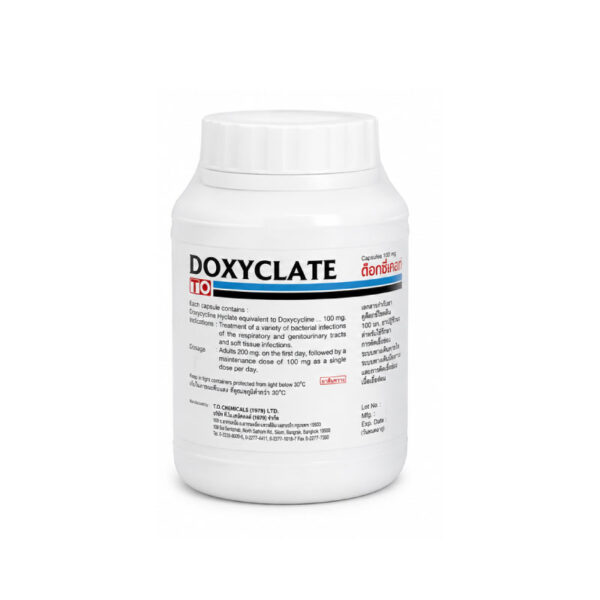
TO DOXYCLATE 100MG 500’S (GREEN)
Doxycycline 100 mg เป็นยาปฏิชีวนะกลุ่ม tetracycline ใช้รักษาการติดเชื้อแบคทีเรียที่ไวต่อยา เช่น การติดเชื้อทางเดินหายใจ การติดเชื้อทางเพศสัมพันธ์บางชนิด การติดเชื้อจาก Rickettsia และโรคติดเชื้อบางประเภท โดยออกฤทธิ์ยับยั้งการสร้างโปรตีนของแบคทีเรีย ฐานข้อมูล อย. ไทยระบุ DOXYCLATE เป็น capsule 100 mg มีตัวยา doxycycline hyclate และผู้รับอนุญาตคือ บริษัท ที.โอ.เคมีคอลส์ (1979) จำกัด; รายการผลิตภัณฑ์เชิงพาณิชย์พบขนาดบรรจุ 500’S สีเขียว ตามที่ระบุในชื่อสินค้า. (ข้อมูลยาแห่งชาติ)
การออกฤทธิ์
Doxycycline เป็นยาปฏิชีวนะกลุ่ม tetracycline ออกฤทธิ์โดยจับกับ 30S ribosomal subunit ของแบคทีเรีย ทำให้ aminoacyl-tRNA ไม่สามารถเข้าจับกับ ribosomal complex ได้ ส่งผลให้การสร้างโปรตีนของเชื้อถูกยับยั้ง
ฤทธิ์ของ Doxycycline โดยทั่วไปเป็นแบบ bacteriostatic คือยับยั้งการเจริญและเพิ่มจำนวนของแบคทีเรีย มากกว่าการฆ่าเชื้อโดยตรง. (DailyMed)
ขอบเขตการทำลายเชื้อ
Doxycycline มีฤทธิ์ต่อเชื้อ Gram-positive, Gram-negative และเชื้อ atypical หลายชนิด แต่ความไวของเชื้อแตกต่างกันตามชนิดเชื้อ พื้นที่ และแนวโน้มการดื้อยา
เชื้อหรือโรคที่ Doxycycline อาจมีบทบาทในการรักษา ได้แก่ Chlamydia trachomatis, Mycoplasma pneumoniae, Rickettsia spp., Borrelia spp., Vibrio cholerae, Brucella spp. รวมถึงเชื้อที่ก่อโรคทางเดินหายใจ ผิวหนัง และโรคติดเชื้อบางชนิดเมื่อเชื้อไวต่อยา. (NAFDAC Greenbook)
Doxycycline ยังเป็นยาสำคัญสำหรับ chlamydial infection และโรคจาก rickettsiae และอาจใช้เป็นทางเลือกในโรคติดเชื้ออื่นตามการวินิจฉัยและ antimicrobial susceptibility
การเลือกใช้ควรคำนึงถึง local antimicrobial resistance และไม่ควรใช้รักษาการติดเชื้อไวรัส เช่น ไข้หวัดหรือหวัดทั่วไป
เภสัชจลนศาสตร์
Doxycycline ถูกดูดซึมทางเดินอาหารได้ดีมาก โดย oral absorption อยู่ในระดับสูงและใกล้สมบูรณ์ ยากระจายเข้าสู่เนื้อเยื่อหลายชนิดและจับกับ plasma protein ในระดับสูง. (DailyMed)
แตกต่างจาก tetracycline รุ่นเก่าบางชนิด Doxycycline ถูกกำจัดทั้งทางอุจจาระและปัสสาวะ และการสะสมในผู้ป่วย renal impairment มักน้อยกว่า tetracycline บางตัว จึงเป็น tetracycline ที่สามารถใช้ในผู้ป่วยไตบกพร่องหลายกรณีโดยไม่จำเป็นต้องปรับขนาดตาม renal function แบบเดียวกับ tetracycline รุ่นเก่า ทั้งนี้ต้องประเมินผู้ป่วยเป็นรายบุคคล.
อาหารโดยทั่วไปมีผลต่อการดูดซึม Doxycycline น้อยกว่ายา tetracycline รุ่นเก่า แต่ ยาลดกรดและแร่ธาตุที่มี aluminium, calcium, magnesium, iron หรือ zinc สามารถจับกับยาและลดการดูดซึมได้
ข้อห้ามใช้
ห้ามใช้ในผู้ที่มีประวัติแพ้ Doxycycline, tetracyclines หรือส่วนประกอบของผลิตภัณฑ์
ควรหลีกเลี่ยงหรือใช้เฉพาะเมื่อประโยชน์ชัดเจนใน หญิงตั้งครรภ์ เนื่องจาก tetracyclines สามารถผ่านรกและอาจมีผลต่อกระดูกและฟันของทารกที่กำลังพัฒนา
การใช้ใน เด็กอายุต่ำกว่า 8 ปี ต้องพิจารณาข้อบ่งใช้อย่างรอบคอบ เนื่องจาก tetracycline-class drugs อาจทำให้ฟันเปลี่ยนสีถาวรและมีผลต่อ enamel อย่างไรก็ตาม ในโรคติดเชื้อรุนแรงบางชนิด เช่น rickettsial disease แนวทางสมัยใหม่อาจให้ใช้ Doxycycline ได้เมื่อประโยชน์มากกว่าความเสี่ยง. (DailyMed)
ข้อความระวัง
Doxycycline อาจทำให้เกิด oesophagitis และ oesophageal ulceration โดยเฉพาะเมื่อรับประทานยาพร้อมน้ำน้อยหรือรับประทานก่อนนอน
ควรกลืนแคปซูลพร้อมน้ำเต็มแก้ว และ ไม่นอนทันทีหลังรับประทานยา โดยควรอยู่ในท่านั่งหรือยืนอย่างน้อยประมาณ 30 นาที
อาจเกิด photosensitivity ทำให้ผิวไวต่อแสงแดดและไหม้แดดง่ายขึ้น จึงควรหลีกเลี่ยงแสงแดดจัดและใช้การป้องกันแสงอย่างเหมาะสม
เช่นเดียวกับยาปฏิชีวนะอื่น Doxycycline อาจทำให้เกิด Clostridioides difficile-associated diarrhoea ซึ่งอาจรุนแรงได้ หากมีท้องเสียมาก ถ่ายเป็นน้ำบ่อย หรือถ่ายเป็นเลือดระหว่างหรือหลังใช้ยา ควรพบแพทย์
มีรายงาน intracranial hypertension (pseudotumor cerebri) ซึ่งอาจทำให้ปวดศีรษะรุนแรง ตามัว เห็นภาพซ้อน หรือ papilledema โดยความเสี่ยงอาจเพิ่มขึ้นเมื่อใช้ร่วมกับ systemic retinoids เช่น isotretinoin. (DailyMed)
การใช้ยาในระยะตั้งครรภ์และให้นมบุตร
การตั้งครรภ์: โดยทั่วไปควรหลีกเลี่ยง Doxycycline ระหว่างตั้งครรภ์ โดยเฉพาะช่วงที่มีการพัฒนากระดูกและฟัน เว้นแต่เป็นโรคติดเชื้อที่ประโยชน์จากการรักษามากกว่าความเสี่ยงและไม่มีทางเลือกที่เหมาะสมกว่า
การให้นมบุตร: Doxycycline สามารถผ่านเข้าสู่น้ำนมได้ การใช้ระยะสั้นอาจได้รับการประเมินแตกต่างกันตามแต่ละแนวทาง แต่การใช้เป็นเวลานานหรือซ้ำหลายครั้งควรหลีกเลี่ยงหรือได้รับการประเมินจากแพทย์ โดยเฉพาะเมื่อมีทางเลือกอื่นที่เหมาะสมกว่า.
อาการข้างเคียง
อาการที่พบได้ ได้แก่ คลื่นไส้ อาเจียน ปวดท้อง ท้องเสีย เบื่ออาหาร และ dyspepsia
อาจเกิด oesophagitis, oesophageal ulceration หรือเจ็บเวลากลืน โดยเฉพาะหากรับประทานก่อนนอนหรือน้ำน้อย
อาจพบ ผื่น คัน urticaria และ photosensitivity
อาการสำคัญแต่พบไม่บ่อย ได้แก่ anaphylaxis, severe cutaneous adverse reactions, hepatotoxicity, pancreatitis, intracranial hypertension และ C. difficile-associated diarrhoea. (DailyMed)
การใช้ tetracycline ในช่วงพัฒนาการของฟันอาจทำให้ ฟันเปลี่ยนสีถาวรและ enamel hypoplasia
การได้รับยาเกินขนาด
ไม่มี specific antidote สำหรับ Doxycycline overdose
การรักษาเป็นแบบ supportive และ symptomatic
หากได้รับยาเกินขนาดมาก ควรประเมินอาการทางระบบทางเดินอาหาร ตับ ไต และภาวะแทรกซ้อนอื่นตามความเหมาะสม
Doxycycline จับกับ plasma protein ในระดับสูง ดังนั้น dialysis ไม่ได้ช่วยกำจัดยาได้อย่างมีประสิทธิภาพ
ปฏิกิริยาระหว่างยา
Antacids และแร่ธาตุ: ผลิตภัณฑ์ที่มี aluminium, calcium, magnesium, iron หรือ zinc สามารถจับกับ Doxycycline และลดการดูดซึม จึงควรแยกเวลารับประทาน
Bismuth preparations: อาจลด bioavailability ของ Doxycycline จึงควรหลีกเลี่ยงการรับประทานพร้อมกัน
Warfarin และ anticoagulants: tetracyclines อาจเพิ่ม anticoagulant effect ผู้ป่วยบางรายอาจต้องติดตาม INR และปรับขนาด anticoagulant
Isotretinoin และ systemic retinoids: ควรหลีกเลี่ยงการใช้ร่วมกัน เนื่องจากเพิ่มความเสี่ยง intracranial hypertension
Carbamazepine, phenytoin และ barbiturates: อาจเพิ่ม metabolism ของ Doxycycline และลดระดับยา
Methoxyflurane: ไม่ควรใช้ร่วมกับ tetracyclines เนื่องจากมีรายงาน renal toxicity รุนแรง. (DailyMed)
ชื่อและความแรงของยา (Drug Name and Strength)
Doxycycline hyclate 100 mg capsule
ฐานข้อมูลสำนักงานคณะกรรมการอาหารและยาไทยระบุ DOXYCLATE เป็น capsule ความแรง 100 mg โดยสารสำคัญคือ doxycycline hyclate และผู้รับอนุญาตคือ บริษัท ที.โอ.เคมีคอลส์ (1979) จำกัด. (ข้อมูลยาแห่งชาติ)
กรมวิทยาศาสตร์การแพทย์ยังมี DOXYCLATE ของ T.O. Chemicals อยู่ในรายการ Doxycycline hydrochloride capsules ของ Green Book. (BDN)
รายการผลิตภัณฑ์เชิงพาณิชย์ที่ตรวจสอบพบรายการ “DOXYCLATE (500’S) เขียว TO” ซึ่งสอดคล้องกับขนาดและสีที่ผู้ใช้ระบุ. (Oriental Pharma)
ข้อบ่งใช้ (Indications)
Doxycycline ใช้รักษาการติดเชื้อที่เกิดจากเชื้อซึ่งไวต่อยา เช่น การติดเชื้อทางเดินหายใจบางชนิด, Chlamydia infection, nongonococcal urethritis/cervicitis, rickettsial diseases, Lyme disease, brucellosis ร่วมกับยาอื่น, cholera และการติดเชื้อผิวหนังบางชนิด
สามารถใช้รักษา acne vulgaris บางกรณีจากทั้งฤทธิ์ต้านเชื้อและฤทธิ์ลดการอักเสบ
Doxycycline ยังมีบทบาทใน malaria prophylaxis และการรักษามาลาเรียร่วมกับยาต้านมาลาเรียอื่น ตามพื้นที่และแนวทางที่เกี่ยวข้อง. (NAFDAC Greenbook)
ควรใช้ Doxycycline เฉพาะเมื่อมีข้อบ่งใช้ที่เหมาะสมหรือสงสัยอย่างมีเหตุผลว่าเป็น การติดเชื้อแบคทีเรียที่ไวต่อยา เพื่อช่วยลดการเกิด antimicrobial resistance. (DailyMed)
ขนาดยาแนะนำ (Recommended Dosage)
ขนาดยาขึ้นกับ โรค เชื้อ ความรุนแรง อายุ และภาวะทางคลินิกของผู้ป่วย จึงไม่มี regimen เดียวที่เหมาะกับการติดเชื้อทุกชนิด
สำหรับการติดเชื้อทั่วไปในผู้ใหญ่ ขนาดอ้างอิงที่ใช้บ่อยคือ:
วันแรก 200 mg/day โดยอาจให้ครั้งเดียวหรือแบ่งเป็น 100 mg ทุก 12 ชั่วโมง
จากนั้น:
100 mg/day
ในกรณีการติดเชื้อรุนแรง อาจใช้:
100 mg ทุก 12 ชั่วโมง
ตลอดช่วงการรักษา ตามข้อบ่งใช้และดุลยพินิจของแพทย์. (DailyMed)
ตัวอย่างเช่น uncomplicated urogenital Chlamydia trachomatis infection มักใช้ Doxycycline 100 mg วันละ 2 ครั้งเป็นเวลา 7 วัน ตามแนวทางที่เหมาะสม
ควรกลืนแคปซูลพร้อม น้ำเต็มแก้ว และอยู่ในท่านั่งหรือยืนหลังรับประทาน หลีกเลี่ยงการรับประทานก่อนนอนทันที
ผลิตภัณฑ์ที่มี calcium, magnesium, aluminium, iron หรือ zinc ควรรับประทานแยกจาก Doxycycline เพื่อหลีกเลี่ยงการลดการดูดซึม
ไม่ควรหยุดยาเองก่อนครบระยะเวลาที่กำหนด และไม่ควรนำยาที่เหลือจากการรักษาครั้งก่อนมาใช้เอง
คำเตือนตามประกาศคำเตือนสาธารณะ (Warnings in Accordance with Public Safety Announcements)
ใช้ Doxycycline เฉพาะสำหรับ การติดเชื้อแบคทีเรียหรือข้อบ่งใช้อื่นที่มีหลักฐานรองรับ ไม่ควรใช้รักษาไข้หวัด ไข้หวัดใหญ่ หรือการติดเชื้อไวรัส
หากมี เจ็บหน้าอกหรือเจ็บมากเวลากลืน ระหว่างใช้ยา ให้สงสัย oesophageal irritation/ulceration และควรได้รับการประเมิน
ควรดื่มน้ำตามมากเพียงพอและไม่รับประทานยาทันทีก่อนนอน
หากเกิด ผื่นรุนแรง ใบหน้าหรือคอบวม หายใจลำบาก หรือตุ่มพองของผิวหนัง ให้หยุดยาและรับการรักษาทันที
หากมี ปวดศีรษะรุนแรง ตามัว หรือเห็นภาพซ้อน ควรได้รับการประเมิน intracranial hypertension
ควรหลีกเลี่ยงแดดจัด เนื่องจาก Doxycycline อาจทำให้เกิด photosensitivity
เด็กเล็กและหญิงตั้งครรภ์ควรใช้เฉพาะภายใต้การประเมิน benefit-risk ที่เหมาะสม
ภาวะการเก็บรักษา (Storage Conditions)
ฐานข้อมูล อย. ไทยที่ตรวจสอบยืนยันชื่อ DOXYCLATE, ความแรง 100 mg, รูปแบบ capsule และผู้รับอนุญาต แต่ข้อมูลสาธารณะที่พบไม่ได้แสดง storage condition เฉพาะของ DOXYCLATE 100 mg ขนาด 500’S อย่างชัดเจน. (ข้อมูลยาแห่งชาติ)
ดังนั้นควรยึด ฉลากและเอกสารกำกับ DOXYCLATE ของ T.O. Chemicals ที่มากับผลิตภัณฑ์จริงเป็นหลัก
เพื่อข้อมูลอ้างอิง Doxycycline Hyclate Capsules 100 mg ใน current U.S. labeling บางผลิตภัณฑ์ระบุเก็บที่ 20–25°C ในภาชนะปิดสนิทและป้องกันแสง แต่ไม่ควรนำข้อกำหนดดังกล่าวมาใช้แทนฉลากของ DOXYCLATE โดยตรงหากฉลากไทยระบุแตกต่างกัน. (DailyMed)
แหล่งข้อมูลอ้างอิง
สำนักงานคณะกรรมการอาหารและยา — DOXYCLATE
กรมวิทยาศาสตร์การแพทย์ — Green Book
DailyMed — Doxycycline Hyclate Capsules
emc — Doxycycline Hyclate products
หมายเหตุสำคัญ: ข้อมูลนี้จัดทำขึ้นเพื่อให้ความรู้เบื้องต้นเกี่ยวกับยาเท่านั้น ไม่สามารถใช้แทนการวินิจฉัย การรักษา หรือคำแนะนำจากบุคลากรทางการแพทย์ได้ การเลือกใช้ยา ขนาดยา และระยะเวลาการรักษาอาจแตกต่างกันในแต่ละบุคคล โปรดปรึกษาแพทย์หรือเภสัชกรก่อนใช้ยาทุกครั้ง และไม่ควรปรับขนาดยา หยุดยา หรือใช้ยาร่วมกับยาอื่นด้วยตนเอง เพื่อความปลอดภัยในการใช้ยา
TO DOXYCLATE 100MG 500’S (GREEN)
Doxycycline 100 mg is a tetracycline-class antibacterial medicine used for susceptible bacterial infections, including selected respiratory, sexually transmitted, rickettsial, and other infections. It inhibits bacterial protein synthesis by binding to the 30S ribosomal subunit. The Thai FDA identifies DOXYCLATE as a 100 mg capsule containing doxycycline hyclate, licensed to T.O. Chemicals (1979) Co., Ltd. A commercial product listing confirms the 500’S green presentation specified in the product title. (ข้อมูลยาแห่งชาติ)
Mechanism of Action
Doxycycline is a tetracycline antibacterial agent that binds to the bacterial 30S ribosomal subunit.
This prevents aminoacyl-tRNA from binding to the ribosomal acceptor site and inhibits bacterial protein synthesis.
Its antibacterial activity is primarily bacteriostatic. (DailyMed)
Antimicrobial Spectrum
Doxycycline has activity against a broad range of susceptible Gram-positive, Gram-negative, and atypical organisms.
Clinically important susceptible organisms may include Chlamydia trachomatis, Mycoplasma pneumoniae, Rickettsia spp., Borrelia spp., Vibrio cholerae, and Brucella spp., together with selected respiratory, skin, and other bacterial pathogens. (NAFDAC Greenbook)
Susceptibility varies by organism, geographical location, and local resistance patterns. Treatment should therefore be guided by clinical diagnosis, local antimicrobial recommendations, and microbiological susceptibility testing where appropriate.
Doxycycline has no activity against viruses and should not be used for common colds or other viral infections.
Pharmacokinetics
Doxycycline is very well absorbed following oral administration, with oral absorption approaching completeness.
It distributes widely into tissues and is substantially protein bound. (DailyMed)
Doxycycline is eliminated through both intestinal/faecal and renal pathways. Unlike some older tetracyclines, clinically significant accumulation is less dependent on renal elimination, although individual patient factors should still be assessed.
Food generally has less impact on Doxycycline absorption than on older tetracyclines, but polyvalent cations including aluminium, calcium, magnesium, iron, and zinc can chelate Doxycycline and reduce absorption.
Contraindications
Doxycycline is contraindicated in patients with hypersensitivity to Doxycycline, another tetracycline, or formulation excipients.
Use during pregnancy is generally avoided unless the expected clinical benefit clearly outweighs potential fetal risk.
Routine use in children younger than 8 years is generally avoided because tetracycline-class medicines may cause permanent tooth discolouration and enamel effects. However, Doxycycline may still be recommended for serious infections such as rickettsial diseases when the benefit outweighs this risk. (DailyMed)
Precautions
Doxycycline may cause oesophagitis and oesophageal ulceration, particularly when taken with insufficient water or immediately before lying down.
Capsules should be swallowed with a full glass of water, and the patient should remain upright for at least approximately 30 minutes after administration.
Photosensitivity may occur, resulting in exaggerated sunburn reactions.
Like other antibacterial medicines, Doxycycline may cause Clostridioides difficile-associated diarrhoea, including potentially severe colitis.
Rare intracranial hypertension may occur and may present with severe headache, blurred vision, diplopia, or papilloedema. Concomitant systemic retinoids such as isotretinoin may further increase this risk. (DailyMed)
Use During Pregnancy and Breastfeeding
Pregnancy: Doxycycline is generally avoided during pregnancy because tetracycline exposure may affect developing teeth and bone. Use may occasionally be justified for serious infections after an individual benefit-risk assessment.
Breastfeeding: Doxycycline is excreted into breast milk. Short courses are assessed differently by different authorities, but prolonged or repeated treatment should generally be avoided unless specifically considered appropriate by a healthcare professional.
Adverse Effects
Adverse effects may include nausea, vomiting, abdominal discomfort, diarrhoea, dyspepsia, and reduced appetite.
Oesophagitis and oesophageal ulceration may occur, particularly when capsules are taken at bedtime or with insufficient fluid.
Dermatological reactions include rash, urticaria, and photosensitivity.
Clinically important but uncommon adverse reactions include anaphylaxis, severe cutaneous adverse reactions, hepatotoxicity, pancreatitis, intracranial hypertension, and C. difficile-associated diarrhoea. (DailyMed)
Tetracycline exposure during tooth development may cause permanent tooth discolouration and enamel hypoplasia.
Overdose
There is no specific antidote for Doxycycline overdose.
Treatment is supportive and symptomatic, with appropriate monitoring based on the amount ingested and clinical manifestations.
Because Doxycycline is substantially protein bound, dialysis is not effective for meaningful drug removal.
Drug Interactions
Antacids and mineral supplements: Products containing aluminium, calcium, magnesium, iron, or zinc can reduce Doxycycline absorption and should be separated from dosing.
Bismuth preparations: May reduce Doxycycline bioavailability.
Warfarin and other anticoagulants: Tetracyclines may potentiate anticoagulant activity; INR monitoring and anticoagulant dose adjustment may occasionally be required.
Isotretinoin and systemic retinoids: Concomitant use should generally be avoided because of increased risk of intracranial hypertension.
Carbamazepine, phenytoin, and barbiturates: May increase Doxycycline metabolism and reduce systemic exposure.
Methoxyflurane: Concomitant tetracycline exposure should be avoided because severe renal toxicity has been reported. (DailyMed)
Drug Name and Strength
Doxycycline hyclate 100 mg capsule
The Thai FDA identifies DOXYCLATE as a 100 mg capsule containing doxycycline hyclate, licensed to T.O. Chemicals (1979) Co., Ltd. (ข้อมูลยาแห่งชาติ)
The Thai Department of Medical Sciences Green Book also lists DOXYCLATE manufactured by T.O. Chemicals among Doxycycline hydrochloride capsule products. (BDN)
A current commercial listing identifies the specific presentation as “DOXYCLATE (500’S) เขียว TO”, supporting the 500-count green presentation specified by the user. (Oriental Pharma)
Indications
Doxycycline is used for susceptible bacterial infections including selected respiratory tract infections, chlamydial infections, nongonococcal urethritis/cervicitis, rickettsial diseases, Lyme disease, brucellosis in combination therapy, cholera, and selected skin infections. (NAFDAC Greenbook)
It may also be used in selected cases of acne vulgaris.
Doxycycline has established roles in malaria prophylaxis and combination treatment of malaria where recommended by applicable guidelines.
It should be used only for infections proven or strongly suspected to be caused by susceptible bacteria in order to reduce development of antimicrobial resistance. (DailyMed)
Recommended Dosage
The dosage depends on the infection, causative organism, severity, age, and individual clinical circumstances.
A commonly referenced adult regimen for many infections is:
200 mg on the first day, administered as a single dose or as 100 mg every 12 hours,
followed by:
100 mg once daily
For more severe infections:
100 mg every 12 hours
may be continued throughout treatment. (DailyMed)
For example, uncomplicated urogenital Chlamydia trachomatis infection is commonly treated with Doxycycline 100 mg twice daily for 7 days, where consistent with current treatment guidance.
The capsule should be swallowed with a full glass of water, and patients should remain upright after dosing.
Mineral-containing antacids or supplements should be separated from Doxycycline to avoid impaired absorption.
Treatment duration should follow the specific diagnosis and prescribed regimen; patients should not stop therapy early or reuse leftover antibiotics without professional advice.
Warnings in Accordance with Public Safety Announcements
Doxycycline should be used only for appropriate bacterial infections or other established indications and should not be used to treat viral respiratory infections.
Patients who develop painful swallowing or retrosternal pain should be assessed for oesophageal irritation or ulceration.
Capsules should be taken with adequate water and not immediately before bedtime.
Severe rash, facial or throat swelling, breathing difficulty, or blistering skin requires urgent medical attention.
Severe headache, blurred vision, or double vision may indicate intracranial hypertension and warrants prompt evaluation.
Patients should limit excessive sunlight exposure because photosensitivity can occur.
Use during pregnancy and in young children requires an appropriate individual benefit-risk assessment.
Storage Conditions
The Thai FDA record confirms the identity, strength, capsule dosage form, and licence holder of DOXYCLATE 100 mg, but the retrieved public record does not clearly state product-specific storage conditions for the 500’S presentation. (ข้อมูลยาแห่งชาติ)
The Thai marketed DOXYCLATE package label and T.O. Chemicals package insert should therefore take precedence.
For reference, current U.S. labeling for certain Doxycycline Hyclate 100 mg capsules specifies storage at 20–25°C in a tight, light-resistant container. This should not automatically be treated as DOXYCLATE-specific if the Thai label differs. (DailyMed)
References
Thai FDA — DOXYCLATE
Thai Department of Medical Sciences — Green Book
DailyMed — Doxycycline Hyclate Capsules
emc — Doxycycline Hyclate
Important Notice: This information is provided for general educational purposes only and is not intended to replace professional medical diagnosis, treatment, or advice. The appropriate medicine, dosage, and duration of treatment may vary from person to person. Always consult a doctor or pharmacist before using any medication. Do not change the dose, stop treatment, or combine medicines on your own without professional advice.