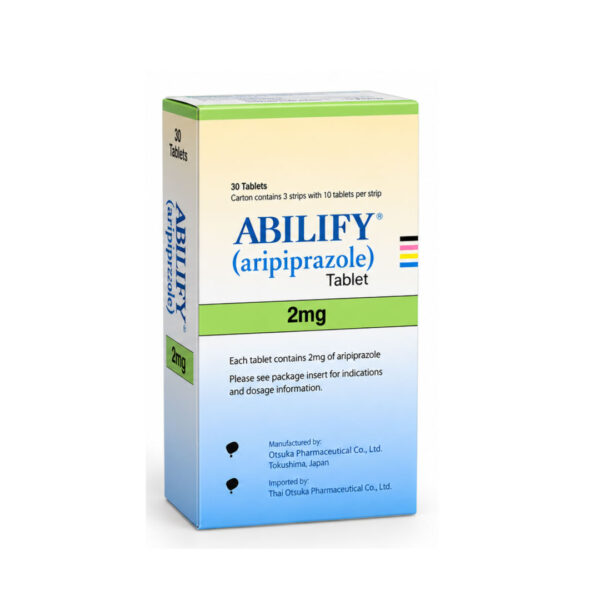
ABILIFY Aripiprazole 2 mg 30 Tablets
Aripiprazole 2 mg เป็นยารักษาโรคทางจิตเวชในกลุ่ม atypical antipsychotic ออกฤทธิ์ปรับการทำงานของ dopamine และ serotonin ในสมอง ใช้รักษาโรคจิตเภทและ Bipolar I Disorder ในข้อบ่งใช้ที่ได้รับอนุมัติ รวมถึงมีข้อบ่งใช้อื่นในบางประเทศ ผลิตภัณฑ์ ABILIFY TABLET 2 MG (ARIPIPRAZOLE) ขึ้นทะเบียนในประเทศไทยเป็นยาเม็ด Aripiprazole 2 mg โดยบริษัท ไทยโอซูก้า จำกัด เป็นผู้รับอนุญาต. (ข้อมูลยาแห่งชาติ)
การออกฤทธิ์
Aripiprazole ออกฤทธิ์เป็น partial agonist ที่ dopamine D2 และ serotonin 5-HT1A receptors และเป็น antagonist ที่ serotonin 5-HT2A receptor
ลักษณะ partial agonist ทำให้ยาไม่ได้ปิดกั้น dopamine อย่างสมบูรณ์ แต่ช่วยปรับ dopaminergic activity ตามสภาวะของระบบประสาท ซึ่งมีส่วนช่วยควบคุมอาการ psychosis และ mania. (European Medicines Agency (EMA))
ขอบเขตการทำลายเชื้อ
ไม่มี
Aripiprazole ไม่ใช่ยาปฏิชีวนะ ยาต้านไวรัส หรือยาต้านเชื้อรา และไม่มีฤทธิ์ในการกำจัดเชื้อก่อโรค
เภสัชจลนศาสตร์
Aripiprazole ถูกดูดซึมได้ดีหลังรับประทาน โดยระดับสูงสุดในเลือดมักเกิดภายในประมาณ 3–5 ชั่วโมง และมี oral bioavailability สูงประมาณ 87%
Aripiprazole และ active metabolite คือ dehydro-aripiprazole จับกับ plasma protein มากกว่า 99%
ยาถูก metabolized ที่ตับเป็นหลักผ่าน CYP2D6 และ CYP3A4
Elimination half-life ของ Aripiprazole โดยทั่วไปประมาณ 75 ชั่วโมง และอาจยาวขึ้นอย่างมากในผู้ที่เป็น CYP2D6 poor metabolizer จึงควรพิจารณาปรับขนาดยาในผู้ป่วยบางกลุ่มหรือเมื่อใช้ยาที่มีผลต่อ CYP2D6/CYP3A4 ร่วมกัน. (European Medicines Agency (EMA))
ข้อห้ามใช้
ห้ามใช้ในผู้ที่มีประวัติแพ้ Aripiprazole หรือส่วนประกอบของยา
ปฏิกิริยาการแพ้ที่มีรายงานมีตั้งแต่ผื่นคันและ urticaria ไปจนถึง anaphylaxis. (DailyMed)
ข้อความระวัง
Aripiprazole อาจทำให้เกิด akathisia, restlessness, tremor, extrapyramidal symptoms, somnolence, dizziness และ orthostatic hypotension
ต้องระวัง Neuroleptic Malignant Syndrome (NMS) ซึ่งเป็นภาวะรุนแรงและอาจเป็นอันตรายถึงชีวิต หากมีไข้สูง กล้ามเนื้อแข็ง สับสน ระดับความรู้สึกตัวเปลี่ยนแปลง หรือ autonomic instability ต้องได้รับการประเมินทันที. (DailyMed)
อาจเกิด tardive dyskinesia โดยเฉพาะเมื่อใช้ยาระยะยาว หากมีการเคลื่อนไหวของใบหน้า ลิ้น แขนขา หรือร่างกายที่ควบคุมไม่ได้ควรได้รับการประเมิน
ยากลุ่ม atypical antipsychotics อาจสัมพันธ์กับ hyperglycaemia/diabetes mellitus, dyslipidaemia และน้ำหนักเพิ่ม จึงควรติดตามน้ำหนัก glucose และ lipid profile ตามความเหมาะสม. (DailyMed)
มีรายงาน pathological gambling และ impulse-control disorders เช่น hypersexuality, compulsive shopping และ binge/compulsive eating ผู้ป่วยและครอบครัวควรแจ้งแพทย์หากเกิดความต้องการหรือพฤติกรรมที่ควบคุมไม่ได้
ควรระวังในผู้ที่มีประวัติ seizure, cardiovascular disease, cerebrovascular disease, hypotension หรือมีความเสี่ยงต่อการหกล้ม
การใช้ยาในระยะตั้งครรภ์และให้นมบุตร
การตั้งครรภ์: ควรใช้เมื่อประโยชน์ที่คาดว่าจะได้รับมากกว่าความเสี่ยง การได้รับ antipsychotics รวมถึง Aripiprazole ในช่วงไตรมาสที่ 3 อาจทำให้ทารกแรกเกิดมี extrapyramidal symptoms และ/หรือ withdrawal symptoms เช่น agitation, tremor, muscle tone ผิดปกติ ง่วง หายใจลำบาก หรือดูดนมลำบาก. (DailyMed)
การให้นมบุตร: Aripiprazole สามารถผ่านเข้าสู่น้ำนมได้ และอาจมีผลต่อการสร้างน้ำนมในมารดาบางราย หากใช้ระหว่างให้นมควรติดตามทารก เช่น ภาวะขาดน้ำและน้ำหนักขึ้นไม่เหมาะสม และพิจารณาประโยชน์เทียบกับความเสี่ยงเป็นรายบุคคล. (DailyMed)
อาการข้างเคียง
อาการที่พบได้ ได้แก่ akathisia, restlessness, headache, dizziness, tremor, somnolence, insomnia, nausea, vomiting, dyspepsia และ constipation
อาการสำคัญที่พบได้น้อยกว่า ได้แก่ Neuroleptic Malignant Syndrome, tardive dyskinesia, seizures, hyperglycaemia, orthostatic hypotension, leukopenia/neutropenia, dysphagia และ impulse-control disorders
อาการบางชนิดขึ้นกับข้อบ่งใช้ อายุ และขนาดยาที่ได้รับ
การได้รับยาเกินขนาด
การได้รับ Aripiprazole เกินขนาดอาจทำให้ somnolence, lethargy, tachycardia, nausea, vomiting, hypotension หรือ hypertension และ extrapyramidal symptoms
ไม่มี specific antidote การรักษาเป็นแบบ supportive และ symptomatic พร้อมติดตาม cardiovascular status และ ECG ตามความเหมาะสม
เนื่องจาก Aripiprazole จับกับ plasma protein สูงมาก การทำ haemodialysis จึงไม่น่าช่วยกำจัดยาได้อย่างมีนัยสำคัญ
ปฏิกิริยาระหว่างยา
Aripiprazole ถูก metabolized หลักผ่าน CYP2D6 และ CYP3A4
Strong CYP2D6 inhibitors เช่น quinidine, fluoxetine และ paroxetine สามารถเพิ่มระดับ Aripiprazole และโดยทั่วไปอาจต้องลดขนาดยา
Strong CYP3A4 inhibitors เช่น itraconazole และ clarithromycin สามารถเพิ่มระดับ Aripiprazole และอาจต้องลดขนาดยาเช่นกัน. (DailyMed)
หากมีทั้ง strong CYP2D6 และ CYP3A4 inhibitor ร่วมกัน อาจต้องลดขนาดลงมากกว่าการใช้ inhibitor เพียงชนิดเดียว
Strong CYP3A4 inducers เช่น carbamazepine และ rifampicin สามารถลดระดับ Aripiprazole อย่างมีนัยสำคัญ และอาจจำเป็นต้องปรับขนาดตามคำแนะนำของแพทย์. (DailyMed)
Alcohol และ CNS depressants อาจเพิ่มอาการง่วงหรือ impairment และควรระวังการใช้ร่วมกับยาลดความดันเนื่องจากอาจเพิ่ม orthostatic hypotension
ชื่อและความแรงของยา (Drug Name and Strength)
Aripiprazole 2 mg per tablet
ผลิตภัณฑ์ ABILIFY TABLET 2 MG (ARIPIPRAZOLE) ขึ้นทะเบียนในประเทศไทยเป็น tablet มีตัวยาสำคัญ Aripiprazole 2 mg ต่อเม็ด และบริษัท ไทยโอซูก้า จำกัด เป็นผู้รับอนุญาต. (ข้อมูลยาแห่งชาติ)
ขนาดบรรจุที่ระบุคือ 30 เม็ด
ผลิตภัณฑ์ ABILIFY 2 mg ในฉลากต้นแบบของสหรัฐฯ เป็นยาเม็ด สีเขียว รูป modified rectangle มีเครื่องหมาย “A-006” และ “2” และมีบรรจุภัณฑ์ 30 เม็ด. (DailyMed)
ข้อบ่งใช้ (Indications)
ข้อบ่งใช้ของ Aripiprazole แตกต่างกันตามประเทศ
ในสหภาพยุโรป ABILIFY ได้รับอนุมัติสำหรับ schizophrenia ในผู้ใหญ่และวัยรุ่นอายุ 15 ปีขึ้นไป รวมถึง moderate-to-severe manic episodes ใน Bipolar I Disorder และการป้องกัน manic episode ครั้งใหม่ในผู้ใหญ่ที่เคยตอบสนองต่อ Aripiprazole นอกจากนี้ยังใช้รักษา manic episode ในวัยรุ่นอายุ 13 ปีขึ้นไปตามเงื่อนไขของฉลาก. (European Medicines Agency (EMA))
ในสหรัฐอเมริกา oral ABILIFY ยังมีข้อบ่งใช้เพิ่มเติม ได้แก่ adjunctive treatment of major depressive disorder, irritability associated with autistic disorder และ Tourette’s disorder. (DailyMed)
ดังนั้นข้อบ่งใช้สำหรับผู้ป่วยในประเทศไทยควรยึด เอกสารกำกับยาที่ได้รับอนุมัติในประเทศไทย และการประเมินของแพทย์เป็นหลัก
ขนาดยาแนะนำ (Recommended Dosage)
ขนาดยาขึ้นกับ โรค อายุ ยาร่วม การทำงานของ CYP2D6/CYP3A4 และการตอบสนองของผู้ป่วย โดย ABILIFY 2 mg เป็นความแรงที่มีประโยชน์มากสำหรับการเริ่มยา การไต่ขนาด หรือการปรับขนาดเฉพาะบุคคล
สำหรับ schizophrenia ในผู้ใหญ่ ขนาดเริ่มต้นมาตรฐานคือ:
10–15 mg วันละครั้ง
ขนาด maintenance โดยทั่วไปคือ 15 mg วันละครั้ง และขนาดสูงสุดโดยทั่วไป 30 mg/day. (DailyMed)
สำหรับ schizophrenia ในวัยรุ่นอายุ 15–17 ปี แนวทางยุโรประบุว่าสามารถเริ่ม 2 mg/day แล้วค่อยเพิ่มเป็นขนาดเป้าหมาย 10 mg/day. (European Medicines Agency (EMA))
สำหรับข้อบ่งใช้ของสหรัฐฯ บางรายการ 2 mg/day เป็นขนาดเริ่มต้นจริง เช่น adjunctive treatment ของ major depressive disorder ในผู้ใหญ่ ซึ่งฉลาก ABILIFY ระบุขนาดเริ่มต้น 2–5 mg/day และ titrate ตามการตอบสนอง. (DailyMed)
ใน pediatric indications บางชนิด เช่น irritability associated with autistic disorder และ Tourette’s disorder อาจเริ่มด้วย 2 mg/day ก่อนค่อย ๆ เพิ่มขนาดตามอายุ น้ำหนัก และการตอบสนอง. (DailyMed)
ABILIFY tablets รับประทาน วันละครั้ง พร้อมหรือไม่พร้อมอาหารก็ได้
ผู้ที่เป็น CYP2D6 poor metabolizer หรือใช้ strong CYP2D6/CYP3A4 inhibitors ร่วมกันอาจต้องลดขนาดยา ขณะที่ strong CYP3A4 inducers อาจทำให้ต้องปรับเพิ่มภายใต้การดูแลของแพทย์. (DailyMed)
คำเตือนตามประกาศคำเตือนสาธารณะ (Warnings in Accordance with Public Safety Announcements)
ฉลาก ABILIFY มี Boxed Warning ว่า ผู้สูงอายุที่มี dementia-related psychosis และได้รับยากลุ่ม antipsychotic มีความเสี่ยงเสียชีวิตเพิ่มขึ้น และ ABILIFY ไม่ได้รับอนุมัติสำหรับรักษา dementia-related psychosis. (DailyMed)
ฉลากสหรัฐฯ ยังมี Boxed Warning เรื่อง suicidal thoughts and behaviours ในเด็ก วัยรุ่น และ young adults เมื่อใช้ในบริบทของ antidepressant treatment จึงควรเฝ้าระวังอาการทางอารมณ์และพฤติกรรม โดยเฉพาะช่วงเริ่มยาและหลังปรับขนาด. (DailyMed)
หากมี ไข้สูง กล้ามเนื้อแข็ง สับสน ระดับความรู้สึกตัวเปลี่ยน หรือชีพจรและความดันผิดปกติ ต้องเข้ารับการประเมินทันที เนื่องจากอาจเป็น Neuroleptic Malignant Syndrome
หากเกิดการเคลื่อนไหวที่ควบคุมไม่ได้ควรประเมิน tardive dyskinesia
ผู้ป่วยและครอบครัวควรแจ้งแพทย์หากเกิด การพนันที่ควบคุมไม่ได้ hypersexuality, compulsive shopping หรือ compulsive eating. (DailyMed)
ควรติดตาม glucose, lipid profile และน้ำหนักตามความเหมาะสม โดยเฉพาะผู้ที่มี metabolic risk factors
ภาวะการเก็บรักษา (Storage Conditions)
ฉลาก ABILIFY 2 mg ของสหรัฐฯ ระบุให้เก็บที่ 25°C โดยยอมรับช่วงชั่วคราวประมาณ 15–30°C ตามมาตรฐาน controlled room temperature. (DailyMed)
เอกสาร ABILIFY ของยุโรประบุให้ เก็บในบรรจุภัณฑ์เดิมเพื่อป้องกันความชื้น. (European Medicines Agency (EMA))
สำหรับ ABILIFY 2 mg ที่จำหน่ายในประเทศไทย ให้ยึดเงื่อนไขบน ฉลากและเอกสารกำกับผลิตภัณฑ์ไทย เป็นหลัก
แหล่งข้อมูลอ้างอิง
ในประเทศ
สำนักงานคณะกรรมการอาหารและยา — ABILIFY TABLET 2 MG (ARIPIPRAZOLE)
Thai FDA — ABILIFY 2 mg
ต่างประเทศ
European Medicines Agency — ABILIFY Product Information
EMA — ABILIFY
U.S. National Library of Medicine — ABILIFY Prescribing Information
DailyMed — ABILIFY
หมายเหตุสำคัญ: ข้อมูลนี้จัดทำขึ้นเพื่อให้ความรู้เบื้องต้นเกี่ยวกับยาเท่านั้น ไม่สามารถใช้แทนการวินิจฉัย การรักษา หรือคำแนะนำจากบุคลากรทางการแพทย์ได้ การเลือกใช้ยา ขนาดยา และระยะเวลาการรักษาอาจแตกต่างกันในแต่ละบุคคล โปรดปรึกษาแพทย์หรือเภสัชกรก่อนใช้ยาทุกครั้ง และไม่ควรปรับขนาดยา หยุดยา หรือใช้ยาร่วมกับยาอื่นด้วยตนเอง เพื่อความปลอดภัยในการใช้ยา
ABILIFY Aripiprazole 2 mg 30 Tablets
Aripiprazole 2 mg is an atypical antipsychotic that modulates dopamine and serotonin neurotransmission. It is used in the treatment of schizophrenia and Bipolar I Disorder, with additional approved indications in some jurisdictions. The Thai FDA lists ABILIFY TABLET 2 MG (ARIPIPRAZOLE) as a 2 mg tablet licensed to Thai Otsuka Co., Ltd. (ข้อมูลยาแห่งชาติ)
Mechanism of Action
Aripiprazole acts as a partial agonist at dopamine D2 and serotonin 5-HT1A receptors and as an antagonist at serotonin 5-HT2A receptors.
Its partial agonist profile allows modulation rather than complete blockade of dopaminergic neurotransmission.
Antimicrobial Spectrum
None.
Aripiprazole has no antibacterial, antiviral, or antifungal activity.
Pharmacokinetics
Aripiprazole is well absorbed after oral administration, with peak plasma concentrations generally occurring within approximately 3–5 hours.
Aripiprazole and its active metabolite, dehydro-aripiprazole, are more than 99% protein bound.
Metabolism occurs mainly through CYP2D6 and CYP3A4.
The mean elimination half-life is approximately 75 hours, with substantially longer exposure in CYP2D6 poor metabolisers. (DailyMed)
Contraindications
Contraindicated in patients with a history of hypersensitivity to Aripiprazole.
Hypersensitivity reactions have ranged from pruritus and urticaria to anaphylaxis. (DailyMed)
Precautions
Important adverse effects include akathisia, restlessness, extrapyramidal symptoms, somnolence, dizziness, and orthostatic hypotension.
Neuroleptic Malignant Syndrome is rare but potentially fatal and requires immediate medical assessment and discontinuation of antipsychotic therapy when suspected.
Tardive dyskinesia may occur with prolonged treatment.
Atypical antipsychotics may cause hyperglycaemia/diabetes mellitus, dyslipidaemia, and weight gain, so metabolic parameters should be monitored as clinically appropriate. (DailyMed)
Aripiprazole has also been associated with pathological gambling, hypersexuality, compulsive shopping, and binge or compulsive eating.
Use caution in patients with seizure disorders, cardiovascular disease, cerebrovascular disease, hypotension, or increased risk of falls.
Use During Pregnancy and Breastfeeding
Pregnancy: Third-trimester exposure to antipsychotics may cause neonatal extrapyramidal and/or withdrawal symptoms. Treatment should be based on an individual benefit-risk assessment. (DailyMed)
Breastfeeding: Aripiprazole is excreted into human milk. Breastfed infants should be monitored for dehydration and inadequate weight gain when maternal treatment is necessary. (DailyMed)
Adverse Effects
Adverse effects may include akathisia, restlessness, headache, dizziness, tremor, somnolence, insomnia, nausea, vomiting, dyspepsia, and constipation.
Clinically important reactions include Neuroleptic Malignant Syndrome, tardive dyskinesia, seizures, hyperglycaemia, orthostatic hypotension, leukopenia/neutropenia, dysphagia, and impulse-control disorders.
Overdose
Overdose may cause somnolence, lethargy, tachycardia, nausea, vomiting, blood-pressure abnormalities, and extrapyramidal symptoms.
There is no specific antidote. Management is supportive and symptomatic, with cardiovascular and ECG monitoring when clinically appropriate.
Haemodialysis is unlikely to provide substantial benefit because Aripiprazole is highly protein bound.
Drug Interactions
Aripiprazole is metabolised mainly through CYP2D6 and CYP3A4.
Strong CYP2D6 inhibitors such as quinidine, fluoxetine, and paroxetine increase Aripiprazole exposure and generally require dose reduction.
Strong CYP3A4 inhibitors such as itraconazole and clarithromycin also increase exposure. (DailyMed)
Strong CYP3A4 inducers such as carbamazepine and rifampicin can substantially reduce Aripiprazole concentrations.
Alcohol and other CNS depressants may increase sedation, and caution is warranted with antihypertensive medicines.
Drug Name and Strength
Aripiprazole 2 mg per tablet
ABILIFY TABLET 2 MG (ARIPIPRAZOLE) is registered in Thailand as a tablet containing Aripiprazole 2 mg per tablet. The Thai FDA lists Thai Otsuka Co., Ltd. as the licence holder. (ข้อมูลยาแห่งชาติ)
Pack size specified: 30 tablets
The U.S. ABILIFY 2 mg tablet is described as a green modified-rectangle tablet marked “A-006” and “2”, supplied in bottles of 30 tablets. (DailyMed)
Indications
In Europe, ABILIFY is indicated for schizophrenia in adults and adolescents aged 15 years and older, moderate-to-severe manic episodes in Bipolar I Disorder, and prevention of new manic episodes in adults who previously responded to Aripiprazole. It is also authorised for manic episodes in adolescents aged 13 years and older under specified conditions. (European Medicines Agency (EMA))
In the United States, additional approved oral indications include adjunctive treatment of major depressive disorder, irritability associated with autistic disorder, and Tourette’s disorder. (DailyMed)
Local Thai prescribing information should take precedence when determining approved indications.
Recommended Dosage
Dosage depends on indication, age, concomitant medicines, CYP2D6 metabolic status, and clinical response.
For adult schizophrenia, the recommended starting dose is:
10–15 mg once daily
The usual maintenance dose is 15 mg once daily, with a maximum recommended dose of 30 mg/day. (DailyMed)
For adolescents aged 15–17 years with schizophrenia, European guidance allows initiation at 2 mg/day, followed by gradual titration to a recommended target dose of 10 mg/day. (European Medicines Agency (EMA))
In certain U.S.-approved indications, 2 mg/day is an actual starting dose. For adjunctive treatment of major depressive disorder in adults, the starting dose is generally 2–5 mg/day, followed by individual titration. (DailyMed)
A 2 mg starting dose is also used in some pediatric titration schedules for irritability associated with autistic disorder and Tourette’s disorder.
ABILIFY tablets are administered once daily, with or without food.
Dose reduction may be required in CYP2D6 poor metabolisers and during treatment with strong CYP2D6 or CYP3A4 inhibitors. Strong CYP3A4 inducers may require dose adjustment in the opposite direction. (DailyMed)
Warnings in Accordance with Public Safety Announcements
ABILIFY carries a Boxed Warning stating that elderly patients with dementia-related psychosis treated with antipsychotic medicines have an increased risk of death. ABILIFY is not approved for dementia-related psychosis. (DailyMed)
The U.S. label also carries a warning concerning suicidal thoughts and behaviours in pediatric and young adult patients when used in the context of antidepressant treatment. Close monitoring is required during treatment initiation and dose changes. (DailyMed)
Symptoms suggestive of Neuroleptic Malignant Syndrome, including high fever, severe muscle rigidity, altered mental status, and autonomic instability, require urgent medical attention.
Patients and caregivers should report new or uncontrollable gambling, sexual, shopping, or eating urges.
Weight, glucose, and lipid parameters should be monitored where clinically appropriate.
Storage Conditions
The U.S. ABILIFY label specifies storage at 25°C, with permitted excursions between approximately 15°C and 30°C. (DailyMed)
European ABILIFY product information recommends storage in the original package to protect from moisture. (European Medicines Agency (EMA))
Storage instructions supplied with the Thai-market product should take precedence.
References
Thailand
Thai Food and Drug Administration — ABILIFY TABLET 2 MG (ARIPIPRAZOLE)
Thai FDA — ABILIFY 2 mg
International
European Medicines Agency — ABILIFY Product Information
EMA — ABILIFY
U.S. National Library of Medicine — ABILIFY Prescribing Information
DailyMed — ABILIFY
Important Notice: This information is provided for general educational purposes only and is not intended to replace professional medical diagnosis, treatment, or advice. The appropriate medicine, dosage, and duration of treatment may vary from person to person. Always consult a doctor or pharmacist before using any medication. Do not change the dose, stop treatment, or combine medicines on your own without professional advice.