TRILIPIX 135MG 30 Capsule
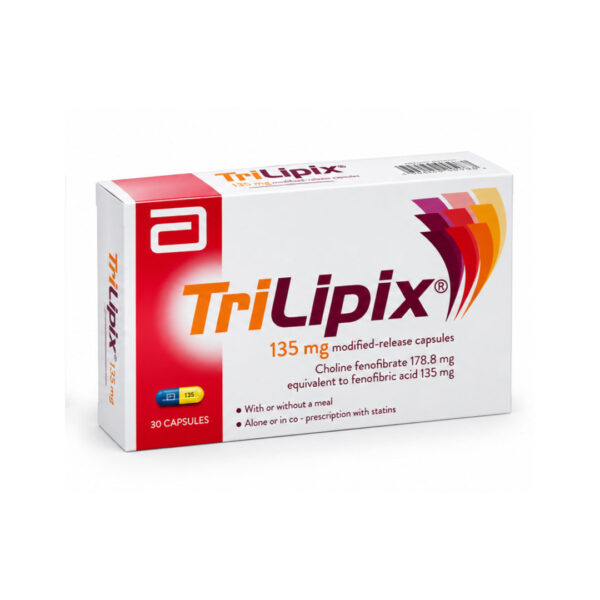
Trilipix 135 mg เป็นยาลดไขมันในเลือดกลุ่ม fibrate โดยมีตัวยา Choline fenofibrate ซึ่งให้ Fenofibric acid 135 mg ต่อแคปซูลชนิด delayed/modified release ใช้ร่วมกับการควบคุมอาหารเพื่อช่วยลด triglycerides โดยเฉพาะในผู้ที่มี severe hypertriglyceridaemia และใช้ลด LDL-C ในผู้ป่วย primary hyperlipidaemia บางราย ฐานข้อมูล อย. ไทยระบุ TRILIPIX 135 MG เป็น modified-release capsule 135 mg ผลิตโดย Fournier Laboratories Ireland Limited และ MIMS Thailand ระบุขนาดบรรจุ 30 แคปซูล. (ข้อมูลยาแห่งชาติ)
การออกฤทธิ์
Choline fenofibrate ถูกเปลี่ยนเป็น fenofibric acid ซึ่งเป็น active moiety และออกฤทธิ์เป็น PPAR-α agonist
การกระตุ้น PPAR-α ช่วยเพิ่มการสลาย triglyceride-rich lipoproteins ผ่านการเพิ่ม lipoprotein lipase และลด ApoC-III ส่งผลให้ triglycerides และ VLDL ลดลง
นอกจากนี้ยังช่วยเพิ่มการสร้าง ApoA-I และ ApoA-II ซึ่งมีส่วนต่อการเพิ่ม HDL-C และช่วยลด LDL-C, total cholesterol และ ApoB ในผู้ป่วยบางราย
ขอบเขตการทำลายเชื้อ
ไม่มี
Fenofibric acid ไม่ใช่ยาปฏิชีวนะ ยาต้านไวรัส หรือยาต้านเชื้อรา และไม่มีฤทธิ์ในการกำจัดเชื้อก่อโรค
เภสัชจลนศาสตร์
Trilipix เป็น delayed-release formulation ซึ่งมี choline fenofibrate ที่เปลี่ยนเป็น fenofibric acid ซึ่งเป็น active metabolite หลัก
Fenofibric acid จับกับ plasma protein ในระดับสูงมาก และถูกกำจัดออกจากร่างกายส่วนใหญ่ทางไตในรูป fenofibric acid และ glucuronide conjugates
ยาสามารถรับประทาน พร้อมหรือไม่พร้อมอาหารก็ได้ และ current prescribing information ระบุให้รับประทานวันละครั้งโดยไม่จำเป็นต้องสัมพันธ์กับมื้ออาหาร. (RxAbbVie)
เนื่องจากการกำจัดอาศัยไตเป็นสำคัญ ผู้ป่วย renal impairment จะมี fenofibric acid exposure เพิ่มขึ้น จึงต้องปรับขนาดตาม renal function
ข้อห้ามใช้
ห้ามใช้ในผู้ที่แพ้ Fenofibric acid, Choline fenofibrate, Fenofibrate หรือส่วนประกอบของยา
ห้ามใช้ในผู้ที่มี severe renal impairment รวมถึง ESRD หรือผู้ที่ได้รับ dialysis
ห้ามใช้ในผู้ที่มี active liver disease รวมถึง persistent unexplained liver-function abnormalities
ห้ามใช้ในผู้ที่มี pre-existing gallbladder disease
Current Trilipix labeling ระบุไม่ให้ใช้ในหญิงให้นมบุตร. (RxAbbVie)
ข้อความระวัง
Fenofibric acid อาจทำให้เกิด myopathy และ rhabdomyolysis โดยความเสี่ยงเพิ่มขึ้นเมื่อใช้ร่วมกับ statin โดยเฉพาะในผู้สูงอายุ ผู้ป่วยเบาหวาน ผู้มี renal impairment หรือ hypothyroidism. (DailyMed)
อาจทำให้ serum creatinine เพิ่มขึ้นแบบ reversible จึงควรตรวจ renal function ก่อนเริ่มยาและติดตามระหว่างรักษาในผู้ที่มีความเสี่ยง
อาจทำให้ serum transaminases เพิ่มขึ้น และมีรายงาน hepatotoxicity จึงควรติดตาม liver function ตามความเหมาะสม
ยาเพิ่ม cholesterol excretion ในน้ำดี จึงเพิ่มความเสี่ยง cholelithiasis หากสงสัย gallstones ควรได้รับการตรวจเพิ่มเติม
มีรายงาน pancreatitis, hematologic changes, hypersensitivity reactions, venous thromboembolic disease และ paradoxical decrease in HDL-C ในผู้ป่วยบางราย. (RxAbbVie)
การใช้ยาในระยะตั้งครรภ์และให้นมบุตร
การตั้งครรภ์: ข้อมูลในหญิงตั้งครรภ์ยังมีจำกัด ควรใช้เฉพาะเมื่อแพทย์ประเมินว่าประโยชน์ที่คาดว่าจะได้รับมากกว่าความเสี่ยงต่อทารก
การให้นมบุตร: Current Trilipix prescribing information ไม่แนะนำ/มีข้อห้ามใช้ระหว่างให้นมบุตร เนื่องจากอาจเกิดอันตรายต่อทารกและยังไม่มีข้อมูลเพียงพอเกี่ยวกับการขับยาในน้ำนม. (DailyMed)
อาการข้างเคียง
อาการที่อาจพบ ได้แก่ ปวดศีรษะ ปวดหลัง ปวดท้อง คลื่นไส้ ท้องเสีย ท้องผูก และอาการทางระบบทางเดินอาหาร
อาจพบ liver enzymes เพิ่มขึ้น และ serum creatinine เพิ่มขึ้น
อาการสำคัญที่ต้องระวัง ได้แก่ myopathy, rhabdomyolysis, hepatotoxicity, gallstones, pancreatitis, hypersensitivity reactions และ venous thromboembolic events
หากมีปวดกล้ามเนื้อรุนแรง กล้ามเนื้ออ่อนแรง ปัสสาวะสีเข้ม ตัวเหลือง ตาเหลือง หรืออาการแพ้รุนแรง ควรได้รับการประเมินโดยเร็ว
การได้รับยาเกินขนาด
ไม่มี specific antidote สำหรับ Fenofibric acid overdose
การรักษาเป็นแบบ supportive และ symptomatic พร้อมติดตาม renal function, hepatic function, CK และอาการทางคลินิก
เนื่องจาก fenofibric acid จับกับ plasma protein สูง จึงไม่คาดว่า haemodialysis จะช่วยกำจัดยาได้อย่างมีประสิทธิภาพ
ปฏิกิริยาระหว่างยา
Statins: การใช้ Trilipix ร่วมกับ statin เพิ่มความเสี่ยง myopathy/rhabdomyolysis แม้ความเสี่ยงของ fenofibrate/fenofibric acid โดยทั่วไปต่ำกว่า gemfibrozil Current label ระบุว่าการใช้ร่วมกับ statin ขนาดสูงสุดยังไม่ได้รับการประเมินเพียงพอและควรหลีกเลี่ยงเว้นแต่ประโยชน์มากกว่าความเสี่ยง. (DailyMed)
Warfarin และ oral coumarin anticoagulants: อาจเพิ่ม anticoagulant effect และทำให้ PT/INR สูงขึ้น ควรติดตาม INR อย่างใกล้ชิดและปรับขนาด anticoagulant ตามความเหมาะสม. (DailyMed)
Bile acid sequestrants: ควรรับประทาน Trilipix อย่างน้อย 1 ชั่วโมงก่อน หรือ 4–6 ชั่วโมงหลัง bile acid resin เพื่อหลีกเลี่ยงการลดการดูดซึม. (DailyMed)
Cyclosporine: อาจเพิ่มความเสี่ยง renal impairment จึงควรประเมินประโยชน์-ความเสี่ยงและติดตาม renal function อย่างใกล้ชิด. (DailyMed)
ชื่อและความแรงของยา (Drug Name and Strength)
Choline fenofibrate equivalent to Fenofibric acid 135 mg per modified-release/delayed-release capsule
ฐานข้อมูล อย. ไทยระบุ TRILIPIX 135 MG เป็น MODIFIED RELEASE CAPSULE 135 mg มีตัวยาสำคัญ choline fenofibrate และผลิตโดย Fournier Laboratories Ireland Limited, Ireland. (ข้อมูลยาแห่งชาติ)
Current U.S. prescribing information ระบุว่าแต่ละ delayed-release capsule มี choline fenofibrate equivalent to fenofibric acid 135 mg. (DailyMed)
แคปซูลขนาด 135 mg ตาม original product มี ฝาสีน้ำเงิน ตัวแคปซูลสีเหลือง และพิมพ์เลข “135”. (DailyMed)
MIMS Thailand ระบุขนาดบรรจุ 30 แคปซูลต่อกล่อง. (MIMS)
ข้อบ่งใช้ (Indications)
ตาม current U.S. Trilipix prescribing information ข้อบ่งใช้ปัจจุบันคือใช้เป็น adjunct to diet สำหรับ:
Severe hypertriglyceridaemia ในผู้ใหญ่ที่ triglycerides ≥500 mg/dL
และ
Primary hyperlipidaemia ในผู้ใหญ่เพื่อช่วยลด LDL-C เมื่อไม่สามารถใช้ recommended LDL-C-lowering therapy ได้. (RxAbbVie)
ข้อจำกัดสำคัญคือ แม้ระดับ triglycerides ที่สูงมาก เช่น >2,000 mg/dL จะเพิ่มความเสี่ยง pancreatitis แต่ ยังไม่มีหลักฐานยืนยันว่า Fenofibrate ลดความเสี่ยง pancreatitis ได้โดยตรง
นอกจากนี้ fenofibrate ไม่ได้แสดงการลด coronary heart disease morbidity และ mortality ใน randomized trials ขนาดใหญ่สองการศึกษาในผู้ป่วยเบาหวานชนิดที่ 2 ตาม current U.S. label. (RxAbbVie)
ข้อบ่งใช้ที่ได้รับอนุมัติในประเทศไทยควรยึด เอกสารกำกับ TRILIPIX ที่มากับผลิตภัณฑ์ไทย หากแตกต่างจาก labeling สหรัฐฯ
ขนาดยาแนะนำ (Recommended Dosage)
สำหรับ severe hypertriglyceridaemia:
45–135 mg วันละครั้ง โดยปรับตามการตอบสนองของ triglycerides
สำหรับ primary hyperlipidaemia ตาม current U.S. labeling:
135 mg วันละครั้ง
ขนาดสูงสุดคือ:
135 mg วันละครั้ง. (RxAbbVie)
สามารถรับประทาน เวลาใดก็ได้ของวัน พร้อมหรือไม่พร้อมอาหารก็ได้
ควร กลืนแคปซูลทั้งเม็ด ไม่บด ไม่หัก ไม่ละลาย และไม่เคี้ยว เพราะเป็น delayed-release formulation. (RxAbbVie)
สำหรับ severe hypertriglyceridaemia สามารถประเมิน triglycerides ได้ตั้งแต่ประมาณ 4–8 สัปดาห์ หลังเริ่มยา และ current label แนะนำหยุดยาหากไม่มี adequate response หลังประมาณ 2 เดือน. (RxAbbVie)
ในผู้ที่มี eGFR 30 ถึง <60 mL/min/1.73 m² ควรเริ่มที่:
45 mg วันละครั้ง
และปรับเพิ่มเมื่อประเมิน renal function และ lipid response แล้ว
ห้ามใช้ในผู้ที่มี eGFR <30 mL/min/1.73 m² รวมถึง ESRD หรือผู้ที่ได้รับ dialysis. (DailyMed)
คำเตือนตามประกาศคำเตือนสาธารณะ (Warnings in Accordance with Public Safety Announcements)
หากมี ปวดกล้ามเนื้อ กล้ามเนื้ออ่อนแรง กดเจ็บ หรือปัสสาวะสีเข้ม โดยเฉพาะเมื่อใช้ร่วมกับ statin ควรได้รับการประเมิน myopathy/rhabdomyolysis
ควรติดตาม renal function เนื่องจากยาอาจทำให้ serum creatinine เพิ่มขึ้น โดยเฉพาะผู้สูงอายุ ผู้ป่วยเบาหวาน และผู้มี renal impairment. (DailyMed)
หากมี ตัวเหลือง ตาเหลือง ปัสสาวะเข้ม เบื่ออาหาร หรือ liver enzymes เพิ่มขึ้นมาก ควรได้รับการประเมิน hepatotoxicity
หากมีอาการปวดชายโครงขวาหรืออาการเข้าได้กับ gallstones ควรประเมิน cholelithiasis
ผู้ที่ใช้ warfarin ต้องติดตาม PT/INR อย่างใกล้ชิด
ไม่ควรใช้ TRILIPIX 135 mg เป็นขนาดเริ่มต้นในผู้ที่มี eGFR 30–<60 mL/min/1.73 m² เพราะ current labeling แนะนำเริ่ม 45 mg/day. (RxAbbVie)
ภาวะการเก็บรักษา (Storage Conditions)
Current original Trilipix prescribing information ระบุให้เก็บที่:
25°C
อนุญาตให้มี temperature excursion ชั่วคราวในช่วง 15–30°C
ควร ป้องกันความชื้น และเก็บให้พ้นมือเด็ก. (DailyMed)
สำหรับผลิตภัณฑ์ที่จำหน่ายในประเทศไทย ควรยึด ฉลากและเอกสารกำกับยาบนกล่องไทยเป็นหลัก หากมีข้อกำหนดแตกต่างจาก U.S. product labeling
แหล่งข้อมูลอ้างอิง
สำนักงานคณะกรรมการอาหารและยา — TRILIPIX 135 MG
MIMS Thailand — Abbott / Trilipix
AbbVie — Trilipix Prescribing Information, revised June 2025
DailyMed — Trilipix Fenofibric Acid Delayed-Release Capsules
หมายเหตุสำคัญ: ข้อมูลนี้จัดทำขึ้นเพื่อให้ความรู้เบื้องต้นเกี่ยวกับยาเท่านั้น ไม่สามารถใช้แทนการวินิจฉัย การรักษา หรือคำแนะนำจากบุคลากรทางการแพทย์ได้ การเลือกใช้ยา ขนาดยา และระยะเวลาการรักษาอาจแตกต่างกันในแต่ละบุคคล โปรดปรึกษาแพทย์หรือเภสัชกรก่อนใช้ยาทุกครั้ง และไม่ควรปรับขนาดยา หยุดยา หรือใช้ยาร่วมกับยาอื่นด้วยตนเอง เพื่อความปลอดภัยในการใช้ยา
TRILIPIX 135MG 30 Capsule
Trilipix 135 mg is a fibrate lipid-regulating medicine containing choline fenofibrate equivalent to fenofibric acid 135 mg in a delayed-/modified-release capsule. It is used together with dietary measures, particularly for severe hypertriglyceridaemia and, in selected patients, for reduction of LDL-C in primary hyperlipidaemia. The Thai FDA lists TRILIPIX 135 MG as a 135 mg modified-release capsule manufactured by Fournier Laboratories Ireland Limited, and MIMS Thailand lists a 30-capsule pack. (ข้อมูลยาแห่งชาติ)
Mechanism of Action
Choline fenofibrate is converted to fenofibric acid, the active moiety and a PPAR-α agonist.
Activation of PPAR-α increases lipoprotein lipase activity and decreases ApoC-III, enhancing the catabolism of triglyceride-rich lipoproteins.
This results in reductions in triglycerides and VLDL, with additional reductions in LDL-C, total cholesterol, and ApoB and a modest increase in HDL-C in selected patients.
Antimicrobial Spectrum
None.
Fenofibric acid has no antibacterial, antiviral, or antifungal activity.
Pharmacokinetics
Trilipix is a delayed-release formulation of choline fenofibrate, which is converted to fenofibric acid.
Fenofibric acid is highly protein bound and is eliminated predominantly through the kidneys as fenofibric acid and its glucuronide conjugates.
Trilipix may be administered with or without food, and its once-daily dosing does not need to be tied to meals. (RxAbbVie)
Systemic exposure increases in renal impairment, making renal-function-based dose adjustment important.
Contraindications
Trilipix is contraindicated in patients with hypersensitivity to fenofibric acid, choline fenofibrate, fenofibrate, or formulation excipients.
It is contraindicated in severe renal impairment, including ESRD and patients receiving dialysis.
It is contraindicated in active liver disease, including persistent unexplained abnormalities in liver function.
It is contraindicated in pre-existing gallbladder disease.
Current labeling also advises against use in nursing mothers. (DailyMed)
Precautions
Fenofibric acid may cause myopathy and rhabdomyolysis, particularly when combined with statins. Risk is greater in older patients and those with diabetes, renal impairment, or hypothyroidism. (DailyMed)
Trilipix may cause a reversible increase in serum creatinine, and renal function should be assessed before treatment and monitored in susceptible patients.
It may also cause elevations in hepatic transaminases and clinically significant hepatotoxicity.
Fenofibric acid increases cholesterol excretion into bile and may therefore increase the risk of cholelithiasis.
Other clinically important risks include pancreatitis, hematologic changes, hypersensitivity reactions, venous thromboembolic disease, and paradoxical decreases in HDL-C. (RxAbbVie)
Use During Pregnancy and Breastfeeding
Pregnancy: Human data are limited. Use should be based on careful assessment of expected maternal benefit versus potential fetal risk.
Breastfeeding: Current product labeling advises against Trilipix during breastfeeding because risk to the nursing infant cannot be excluded. (DailyMed)
Adverse Effects
Adverse effects may include headache, back pain, abdominal discomfort, nausea, diarrhoea, constipation, and other gastrointestinal symptoms.
Laboratory abnormalities may include increased hepatic transaminases and serum creatinine.
Clinically important adverse reactions include myopathy, rhabdomyolysis, hepatotoxicity, cholelithiasis, pancreatitis, hypersensitivity reactions, and venous thromboembolic events.
Overdose
There is no specific antidote for Fenofibric acid overdose.
Management consists of supportive and symptomatic treatment, including appropriate renal, hepatic, and muscular monitoring.
Because fenofibric acid is highly protein bound, haemodialysis is unlikely to provide meaningful drug removal.
Drug Interactions
Statins: Combination therapy may increase the risk of myopathy and rhabdomyolysis. Co-administration with the maximum statin dose has not been adequately evaluated and should generally be avoided unless expected benefit outweighs risk. (DailyMed)
Coumarin anticoagulants such as warfarin: Trilipix may potentiate anticoagulant effects. Frequent PT/INR monitoring and anticoagulant dose adjustment may be required. (DailyMed)
Bile-acid binding resins: Trilipix should be administered at least 1 hour before or 4–6 hours after these agents. (DailyMed)
Cyclosporine: Concomitant use may increase the risk of renal dysfunction; careful benefit-risk assessment and renal monitoring are required. (DailyMed)
Drug Name and Strength
Choline fenofibrate equivalent to Fenofibric acid 135 mg per modified-release/delayed-release capsule
The Thai FDA identifies TRILIPIX 135 MG as a 135 mg modified-release capsule containing choline fenofibrate and manufactured by Fournier Laboratories Ireland Limited, Ireland. (ข้อมูลยาแห่งชาติ)
Current original product labeling states that each delayed-release capsule contains choline fenofibrate equivalent to fenofibric acid 135 mg. (DailyMed)
The original 135 mg capsule has a blue cap and yellow body, with “135” printed on the capsule. (DailyMed)
Pack size:
30 capsules / box. (MIMS)
Indications
Current U.S. prescribing information indicates Trilipix as an adjunct to diet:
For severe hypertriglyceridaemia in adults with triglycerides ≥500 mg/dL
and
For reduction of elevated LDL-C in adults with primary hyperlipidaemia when recommended LDL-C-lowering therapy cannot be used. (RxAbbVie)
An important limitation is that although extremely high triglycerides may increase pancreatitis risk, the effect of Fenofibrate treatment on preventing pancreatitis has not been established.
Current labeling also notes that fenofibrate did not reduce coronary heart disease morbidity and mortality in two large randomized trials involving patients with type 2 diabetes. (RxAbbVie)
Thai-market indications should follow the locally approved TRILIPIX prescribing information where they differ from U.S. labeling.
Recommended Dosage
For severe hypertriglyceridaemia:
45–135 mg orally once daily, adjusted according to triglyceride response.
For primary hyperlipidaemia under current U.S. labeling:
135 mg orally once daily
Maximum recommended dose:
135 mg once daily. (RxAbbVie)
Trilipix may be administered at any time of day, with or without food.
The capsule should be swallowed whole and should not be crushed, broken, dissolved, or chewed. (RxAbbVie)
For severe hypertriglyceridaemia, triglycerides may be reassessed as early as 4–8 weeks after treatment initiation. Current labeling recommends discontinuation when an adequate response is not achieved after approximately 2 months. (RxAbbVie)
For eGFR 30 to <60 mL/min/1.73 m², treatment should begin with:
45 mg once daily
Dose escalation should only occur after renal function and lipid response have been evaluated.
Trilipix is contraindicated when eGFR <30 mL/min/1.73 m², including ESRD and dialysis. (DailyMed)
Warnings in Accordance with Public Safety Announcements
Patients should promptly report unexplained muscle pain, weakness, tenderness, or dark urine, particularly during concomitant statin therapy.
Renal function should be monitored because Trilipix may increase serum creatinine, particularly in older adults, patients with diabetes, and those with renal impairment. (DailyMed)
Symptoms of hepatic injury such as jaundice, dark urine, loss of appetite, or marked fatigue warrant medical evaluation.
Symptoms suggesting gallstones or biliary disease should prompt assessment for cholelithiasis.
Patients taking warfarin require close PT/INR monitoring.
Trilipix 135 mg should not be used as the initial dose in patients with eGFR 30–<60 mL/min/1.73 m²; current labeling recommends starting at 45 mg once daily. (RxAbbVie)
Storage Conditions
Current original Trilipix labeling specifies storage at:
25°C (77°F)
with permitted excursions between:
15–30°C
The product should be protected from moisture and kept out of reach of children. (DailyMed)
For Thai-market packs, the Thai package label and local package insert should take precedence if they specify different storage requirements.
References
Thai FDA — TRILIPIX 135 MG
MIMS Thailand — Abbott / Trilipix
AbbVie — Trilipix Prescribing Information, revised June 2025
DailyMed — Trilipix Fenofibric Acid Delayed-Release Capsules
Important Notice: This information is provided for general educational purposes only and is not intended to replace professional medical diagnosis, treatment, or advice. The appropriate medicine, dosage, and duration of treatment may vary from person to person. Always consult a doctor or pharmacist before using any medication. Do not change the dose, stop treatment, or combine medicines on your own without professional advice.